On March 31, 2026, the Government of Vietnam issued Decree No. 100/2026/ND-CP, amending Decree No. 65/2023/ND-CP on the implementation of several provisions of the Law on Intellectual Property concerning industrial property rights, protection of industrial property rights, rights to plant varieties, and state management of intellectual property.
For the first time in 13 years, the Office of the United States Trade Representative (USTR) has placed a country in the “Priority Foreign Country” (PFC) category — the highest level of concern under the Special 301 Report. Vietnam is also the only country designated as PFC in 2026, marking a significant escalation in intellectual property and trade-related concerns between the two countries.
According to the 2026 Special 301 Report released on April 30, 2026, USTR determined that Vietnam has failed to provide adequate and effective protection and enforcement of intellectual property (IP) rights, while also failing to ensure fair and equitable market access for U.S. rights holders.
The Special 301 Report is an annual review conducted pursuant to Section 182 of the U.S. Trade Act of 1974 (19 U.S.C. § 2242). Under this framework, USTR identifies foreign countries that are considered to deny adequate and effective IP protection or fair market access to U.S. persons relying on intellectual property protection.
The 2026 review process included public submissions by January 28, 2026, submissions from foreign governments by February 11, 2026, a public hearing on February 18, 2026, and publication of the final report on April 30, 2026.
Three Levels of Classification under the Special 301 Report
The Special 301 framework classifies countries into three categories of concern.
The first is the “Watch List” (WL), which includes countries with ongoing concerns relating to IP protection, enforcement, or market access.
The second is the “Priority Watch List” (PWL), reserved for more serious concerns that often trigger intensified bilateral engagement and pressure for legal and enforcement reforms.
The highest category is “Priority Foreign Country” (PFC), applied to countries considered to engage in the most severe or egregious acts, policies, or practices affecting U.S. intellectual property rights, particularly where meaningful negotiations have not been pursued in good faith.
According to USTR, this is the first time since 2013 that a country has been designated as a PFC.
Five Main Grounds Cited by USTR
In this year’s report, USTR identified five principal reasons for elevating Vietnam directly from the Watch List to PFC status.
First, enforcement measures against online piracy were described as inconsistent and ineffective, despite previous actions against several major piracy platforms.
Second, anti-counterfeiting efforts and enforcement against trademark-infringing goods were deemed insufficiently robust.
Third, border enforcement measures relating to IP-infringing goods were considered ineffective.
Fourth, Vietnam was criticized for lacking effective enforcement mechanisms against the use of unlicensed software.
Fifth, USTR noted the absence of adequate criminal enforcement measures against cable and satellite signal theft.
Notably, in the 2025 Special 301 Report, Vietnam remained only on the Watch List. At that time, USTR acknowledged several positive developments, including enforcement actions against piracy websites such as “Xoilac,” “Fmovies,” and “Rophim.” However, the report also stated that there had been “little or no progress” on several longstanding concerns. The direct elevation to PFC status in 2026 suggests that the United States views prior warnings as having failed to produce sufficient practical results.
PFC Status Does Not Automatically Trigger Sanctions
Although highly significant, designation as a Priority Foreign Country does not automatically result in tariffs, sanctions, or immediate trade penalties.
The Special 301 Report is not a judicial ruling, nor is it a decision issued by the World Trade Organization (WTO) or any international tribunal. However, under U.S. law, USTR is generally required to initiate a Section 301 investigation within 30 days of a PFC designation, unless doing so would be detrimental to U.S. economic interests.
If such an investigation is initiated, USTR must request formal consultations with Vietnam. Should consultations fail to resolve the dispute, the United States may proceed with formal dispute settlement mechanisms or unilateral trade measures.
Under the statutory timeline, USTR typically reaches a determination within six months, although the process may be extended to nine months if the matter is particularly complex or if the designated country demonstrates significant progress.
Potential measures available to the United States following an adverse determination may include binding agreements, compensation demands, suspension of trade concessions, additional tariffs, import restrictions, or restrictions affecting services.
Vietnam Is the Only PFC Country in 2026
Vietnam is the sole country designated as a Priority Foreign Country in the 2026 Special 301 Report.
Countries placed on the Priority Watch List include Chile, China, India, Indonesia, Russia, and Venezuela.
Meanwhile, the Watch List includes Algeria, Argentina, Barbados, Belarus, Bolivia, Brazil, Canada, Colombia, Ecuador, Egypt, the European Union, Guatemala, Mexico, Pakistan, Paraguay, Peru, Thailand, Trinidad & Tobago, and Türkiye.
The Need for a Quantifiable Action Plan
Legal and policy observers suggest that Vietnam’s response should not focus solely on disputing the report’s findings, but also on demonstrating measurable enforcement outcomes and a credible reform roadmap.
Vietnam may need to develop a dedicated “Vietnam IP Enforcement Action Plan” with concrete benchmarks over 30-, 60-, 90-, and 180-day periods, specifically targeting the five issues identified by USTR.
In parallel, regular publication of enforcement data is likely to become increasingly important, including statistics relating to administrative, civil, and criminal actions; border control measures; e-commerce and livestream enforcement; online piracy; unlicensed software use; and international cooperation.
More broadly, strengthening IP protection should not be viewed merely as compliance with U.S. demands. If implemented effectively, it could serve as an opportunity to modernize Vietnam’s IP enforcement system, improve the business environment, enhance investor confidence, and better protect Vietnamese enterprises and creators in the digital economy.
The full details of the USTR’s Special 301 Report in English are here: 2026 Special 301 Report
On May 5, 2026, the Prime Minister issued Official Dispatch No. 38/CD-TTg on directing the urgent and decisive implementation of measures to combat, prevent, and handle acts of intellectual property rights infringement. The dispatch was issued in the context of increasingly complex IP infringement activities across various sectors and localities, affecting the investment and business environment as well as the lawful rights and interests of individuals, enterprises, and relevant organizations.
Under the dispatch, the Prime Minister requests ministries, ministerial-level agencies, local authorities, and functional forces to strengthen coordination and mobilize resources to inspect, detect, prevent, and strictly handle acts of intellectual property infringement. Key areas of concern include copyright and related rights infringement, trademark counterfeiting, goods infringing industrial property rights, violations in the digital environment, and infringements involving television signals, films, music, video games, and other digital content.
The dispatch assigns specific responsibilities to relevant authorities, including the Ministry of Public Security, Ministry of National Defence, Ministry of Culture, Sports and Tourism, Ministry of Industry and Trade, Ministry of Finance, Ministry of Foreign Affairs, Ministry of Science and Technology, and People’s Committees of provinces and centrally-run cities. In particular, the Ministry of Science and Technology is assigned to take the lead and coordinate with relevant agencies in implementing assigned tasks, consolidating information, and providing timely guidance for handling arising issues.
Following Official Dispatch No. 38/CD-TTg, the Ministry of Science and Technology issued Official Letter No. 288/BKHCN-SHTT dated May 6, 2026, providing guidance on reporting requirements. Accordingly, ministries, sectors, and local authorities are required to submit daily quick reports from May 7, 2026, and a consolidated report on the results of the intensive implementation period, ensuring that information is complete, accurate, timely, and properly reflects the nature of each case.
The issuance of the dispatch and the reporting guidance demonstrates the Government’s strong direction in enhancing the enforcement of intellectual property rights, protecting the lawful interests of rights holders, consumers, and businesses, and contributing to a transparent, healthy, and internationally aligned business environment.
Download the Full Documents Here
Download Official Dispatch No. 38/CD-TTg of the Prime Minister here.
Download the reporting guidance issued by the Ministry of Science and Technology here.
The 2026 Special 301 Report, published by the Office of the United States Trade Representative (USTR), provides an annual review of intellectual property protection and enforcement among U.S. trading partners. The report highlights global developments, market access issues, enforcement challenges, and country-specific concerns relating to intellectual property rights.
In the 2026 report, USTR identifies Vietnam as a Priority Foreign Country, marking the first time in thirteen years that a country has been placed in this category. According to the report, this identification is based on long-standing concerns regarding intellectual property protection and enforcement in Vietnam.
The report outlines several key areas of concern, including online piracy, counterfeit goods, border enforcement, unlicensed software use, and cable and satellite signal theft. USTR states that these issues have affected U.S. copyright-related industries, brands, and other IP-reliant sectors.
At the same time, the report also acknowledges certain enforcement actions taken in Vietnam, including actions against piracy-related platforms and continued engagement between Vietnam and the United States on intellectual property matters. USTR indicates that it will continue to engage with Vietnam and may consider further actions under Section 301 of the Trade Act of 1974.
Overall, the 2026 Special 301 Report provides an important reference for understanding international intellectual property enforcement trends, with particular attention to Vietnam’s current position in the U.S. trade and IP policy framework.
Download
Summary
This document is the consolidated English version of the Criminal Code of Viet Nam, issued under Consolidation Document No. 135/VBHN-VPQH dated September 5, 2025 by the Office of the National Assembly of Viet Nam. The Criminal Code No. 100/2015/QH13, effective from January 1, 2018, has been amended by Law No. 12/2017/QH14, the Law on Juvenile Justice No. 59/2024/QH15, and Law No. 86/2025/QH15 on amendments to a number of articles of the Criminal Code.
The Criminal Code sets out the legal framework for determining crimes, criminal liability, penalties, judicial measures, and the handling of criminal offences in Viet Nam. It applies to individuals and, in specific cases, commercial legal entities that commit criminal offences as prescribed by law.
The Code provides fundamental principles on the basis of criminal liability, classification of crimes, age of criminal responsibility, intentional and unintentional crimes, preparation for crimes, attempts, complicity, concealment of crimes, and cases where criminal liability may be exempted. It also regulates the effect of the Criminal Code on offences committed within and outside the territory of Viet Nam.
In relation to penalties, the Criminal Code provides primary and additional sentences applicable to individuals, including warning, fine, community sentence, expulsion, determinate imprisonment, life imprisonment, and death sentence. It also sets out penalties applicable to commercial legal entities, such as fines, suspension of operation, permanent shutdown, prohibition from operating in certain fields, and prohibition from raising capital.
The Code further regulates judicial measures, sentencing principles, mitigating and aggravating circumstances, sentence reduction, suspended sentences, conditional parole, deferment or suspension of imprisonment, conviction expungement, and criminal liability of commercial legal entities.
Overall, the Criminal Code serves as a core legal instrument in Viet Nam’s criminal justice system, providing the basis for crime prevention, criminal prosecution, sentencing, enforcement, and protection of the lawful rights and interests of individuals, organizations, and the State.
Download
Summary of Law No. 131/2025/QH15 on Amendments to the Law on Intellectual Property
Law No. 131/2025/QH15, passed by the National Assembly of Viet Nam on December 10, 2025 and effective from April 1, 2026, introduces important amendments to the Law on Intellectual Property. The Law updates several key areas, including copyright and related rights, industrial property rights, plant variety rights, intellectual property management, commercialization, digital transformation, artificial intelligence, online infringement handling, and enforcement mechanisms.
One of the notable updates is the recognition of intellectual property issues arising from artificial intelligence systems. The Law authorizes the Government to provide detailed regulations on the establishment of intellectual property rights where intellectual property subject matters are created using AI systems. It also allows the use of lawfully published and publicly accessible texts and data for scientific research, experimentation, and AI training, provided that such use does not unreasonably prejudice the lawful rights and interests of authors and intellectual property right holders.
The Law further strengthens the policy framework for the creation, protection, management, valuation, and commercial exploitation of intellectual property rights. Intellectual property right holders are encouraged to use IP rights in civil, commercial, investment, credit, and other lawful activities. The Law also supports the use of IP rights for capital contribution, licensing, assignment, mortgage, and other commercial purposes, helping intellectual property become a more practical asset in business and innovation activities.
In relation to state management, the Law emphasizes the development of a comprehensive and effective intellectual property ecosystem. It requires the State to ensure funding, infrastructure, facilities, equipment, and other necessary resources for intellectual property management activities. In addition, the Law introduces provisions on digital transformation in intellectual property activities, including the development of digital infrastructure, online public services, digital platforms, databases on IP protection, databases on IP transaction prices, and the application of automation, big data, and artificial intelligence to improve efficiency and transparency.
For copyright and related rights, the Law clarifies several issues concerning copyright registration, related rights registration, re-granting, replacement, and annulment of certificates. Authors, copyright owners, and related rights owners are responsible for the accuracy of information provided in registration applications. The Law also updates provisions concerning computer programs, backup copies, online platform-based software services, and copyright or related rights created using state budget funding.
Regarding industrial property rights, the Law introduces important procedural changes for inventions, industrial designs, trademarks, geographical indications, and layout designs. Applications may be filed in paper or electronic form via the electronic filing system. The Law clarifies application requirements, filing dates, publication timelines, formal examination, substantive examination, opposition procedures, complaint mechanisms, and accelerated substantive examination for certain invention and trademark applications. It also provides clearer rules on the novelty and industrial applicability of industrial designs, including designs of non-physical products in cyberspace.
The Law also amends provisions relating to trademarks and geographical origin signs. Signs indicating the geographical origin of goods or services, particularly those of Viet Nam, are subject to stricter conditions unless they have been widely used and recognized as trademarks or are elements of collective marks or certification marks as provided by law.
For plant variety rights, the Law updates rules on the right to register plant varieties, especially in cases involving science, technology, and innovation tasks using the state budget. It also revises procedures concerning application filing, technical testing, appraisal timelines, grant of plant variety protection certificates, and maintenance fee payment.
A major enforcement-related update concerns intellectual property rights in cyberspace. The Law expands the responsibilities of intermediary service providers and digital platform operators in protecting intellectual property rights online. It also allows competent authorities to apply measures such as removal, concealment, or disabling access to infringing information, content, accounts, websites, applications, or Internet address identifiers.
The Law also strengthens civil remedies for intellectual property infringement. Where material damage cannot be determined based on specific legal grounds, the Court may decide compensation depending on the extent of damage, but the amount must not exceed VND 1 billion. For moral damage, the Court may award compensation from 10 to 100 times the statutory pay rate, depending on the seriousness of the damage.
Overall, Law No. 131/2025/QH15 represents a significant step in modernizing Viet Nam’s intellectual property legal framework. It reflects the growing importance of digital transformation, artificial intelligence, commercialization of intellectual property assets, online enforcement, and the effective management of IP rights in the context of innovation-driven economic development.
Download the full content here:
Specifically, the Department of Vietnam Customs issued Official Dispatch No.15912/CHQ-GSQL to regional customs sub-departments on enhancing oversight of rare earth export activities.
The directive comes amid broader government efforts to tighten management of mineral resources, particularly high-value strategic minerals.
Under the new requirements, customs authorities will only process export procedures for rare earth products that fully meet conditions and have legally verified origins in accordance with governmental Decree No.17/2020/ND-CP, and are included in export lists issued periodically by the Ministry of Industry and Trade or otherwise approved by competent authorities in special cases.
 |
| Vietnam is expected to issue a national rare earth strategy in 2026 |
Decree 17 dated February 2020 on amending a number of articles of decrees concerning business investment conditions in sectors under the management of the Ministry of Industry and Trade.
At the customs declaration stage, enterprises must provide complete and detailed information on mineral names, quality standards, mine origin, and the entities responsible for extraction and processing.
In cases where trading companies are not directly involved in extraction or processing, they must supplement information on domestic purchase contracts and invoices. Details of mining licences, recovery permits, or export authorisations must also be fully declared.
Notably, the Department of Vietnam Customs requires physical inspection of all rare earth export shipments, except for certain specific cases.
Inspections will be conducted based on risk management principles, combined with verification against product categories and quality standards set by the Ministry of Industry and Trade.
Where sufficient grounds for determination are lacking, customs authorities will take samples for assessment by accredited conformity assessment organisations.
Inspection results will serve as the basis for customs clearance decisions or legal handling. Customs units are also required to strengthen information collection and analysis on rare earth exporters, and promptly place high-risk cases under post-clearance audit.
The Department of Vietnam Customs has instructed all units to strictly implement the directive and publicly post its contents at customs clearance points for enterprises to follow. Any implementation issues must be promptly reported for guidance and resolution.
According to the Ministry of Agriculture and Environment, Vietnam possesses substantial rare earth potential, with reserves ranked among the top two or three globally and distributed across 21 cities and provinces.
The Ministry has largely completed baseline surveys of rare earth-bearing areas, is maintaining strict oversight, and is drafting a national rare earth strategy expected to be issued in early 2026.
Rare earths were for the first time incorporated into the Law on Geology and Minerals, which was passed by the National Assembly in November 2024 and took effect from July 2025.
An amended law, adopted in December 2025, affirms rare earths as specially important strategic minerals, requiring strict control over exploration, extraction and processing, while prohibiting the export of unprocessed rare earth ores.
 |
Experts propose development direction for rare earth industry
Vietnam has the world’s second-largest reserves of rare earths – an estimated 22 million tonnes – yet the resources have remained untapped, scientists have said. |
 |
South Korea’s Trident obtains rights to rare earth mines in Vietnam
Trident Global Holdings, a prominent South Korea-based conglomerate with interests in mining, real estate, and carbon capture technology, has acquired rights to three significant rare earth element mines in Vietnam. |
 |
Vietnam yet to tap rare earth resources
Vietnam boasts a large reserve of approximately 30 million tonnes of rare earth, but the country has yet to conduct thorough research about how to exploit and process it effectively. |
 |
| Photo: thoibaotaichinhvietnam.vn |
According to a first-quarter market report released on April 23 by Mordor Intelligence, Green SM’s share in the app-based taxi segment rose from 51.5 per cent in the fourth quarter of 2025 to just over 54.5 per cent.
The performance extends a trend seen over the past year, during which the Vietnamese electric ride-hailing brand overtook competitors and sustained steady growth, surpassing the 50 per cent threshold in late 2025.
Beyond market share, Green SM also ranked highest in customer satisfaction, while leading in network coverage, trip volume, and average daily revenue.
The report noted that the overall ride-hailing market continued to expand in the first quarter, with gross merchandise value (GMV) reaching $580.71 million, equivalent to 153.26 million trips.
Electric and hybrid vehicle rides accounted for 58.34 per cent of total GMV, highlighting rising demand for green mobility among consumers.
Fluctuations in fuel prices have also put pressure on traditional taxi models, further underscoring the cost advantages of electric vehicles.
 Green SM in pole position to take e-taxi market share Green SM in pole position to take e-taxi market share |
 GSM and Mai Linh to enter auto repair services in Vietnam GSM and Mai Linh to enter auto repair services in Vietnam |
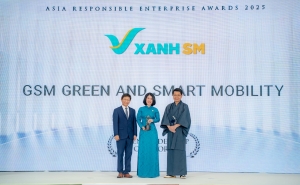 Green SM wins AREA 2025 green leadership award Green SM wins AREA 2025 green leadership award |
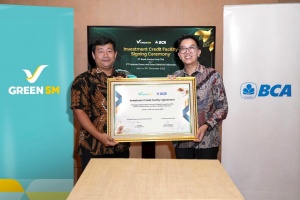 Green SM Indonesia signs investment loan with Bank Central Asia Green SM Indonesia signs investment loan with Bank Central Asia |
 GSM launches Green SM platform in Indonesia and Philippines GSM launches Green SM platform in Indonesia and Philippines |
 New names push ride-hailing offerings New names push ride-hailing offerings |
 Ride-hailing platforms shift gears in green mobility race Ride-hailing platforms shift gears in green mobility race |
 Be Group reports company-wide profitability in 2025 Be Group reports company-wide profitability in 2025 |
Becoming an early seller on emerging platforms is not just a test, but a strategic move to capture a ‘blue ocean’ before competitors fully recognise the opportunity.
In 2026, Vietnam’s e-commerce landscape is no longer dominated solely by major players. Instead, the market is witnessing the rise of platforms that are smarter, safer, and more personalised.
In this context, joining emerging platforms offers undeniable exclusive advantages.
 |
The primary leverage lies in an ‘absolute priority’ algorithm, where new marketplaces proactively boost visibility for pioneer sellers to build their ecosystem, granting you a central presence without the need for massive keyword bidding budgets.
Simultaneously, ‘dream-tier’ operational costs – featuring preferential commission rates and comprehensive shipping subsidies – present a golden opportunity to optimise profit margins, which are otherwise being eroded by escalating fee pressures on legacy platforms.
Most notably, the distinct value comes from a direct connection with category management teams rather than impersonal automated responses, ensuring that a seller’s voice carries genuine weight in shaping the platform’s core features and policies.
However, not every emerging platform is a guaranteed ‘gold mine’ for businesses. Sellers must remain vigilant against latent risks, primarily the disconnect between technological quality and actual traffic volume.
Without robust marketing solutions to drive user engagement, a storefront can easily become ‘commercially invisible’, losing the opportunity to reach customers despite the platform’s superior technical features.
 |
Furthermore, operational stability is a critical factor; vulnerabilities such as payment glitches, delayed order processing, or fragmented logistics systems can directly tarnish a shop’s reputation.
Most notably, as Vietnam’s personal data protection regulations reach a peak of stringency in 2026, legal compliance and cybersecurity have shifted from being optional to mandatory.
Should an e-commerce platform lack a fortified security infrastructure, sellers risk facing vicarious liability – both legally and reputationally – in the event of a severe data breach.
MuaMau: A strategic ecosystem
MuaMau provides a comprehensive solution for sustainable operations. More than just a marketplace, it sets new standards that help sellers optimise resources and scale their business systematically:
Flexible operating model: Through the MuaMau platform, businesses can choose between a fully managed system to maximise efficiency or a semi-managed model, allowing sellers to maintain control over product quality while reducing operational pressure, minimising manual processes, and saving on labour costs.
Guaranteed traffic support: MuaMau ensures stable traffic, helping sellers eliminate concerns about sales performance in the early stages so they can focus entirely on product quality.
 |
Built-in marketing leverage: The platform integrates tools for connecting with KOLs and running seasonal promotional campaigns, allowing brands to scale effectively without heavy investment in external marketing teams.
New e-commerce platforms are becoming an ‘escape route’ for sellers overwhelmed by rising costs and intense competition. While risks still exist, with a clear mindset and technological agility, this presents a strong opportunity to establish your presence and lead in a new market landscape.
 |
E-commerce platforms to pay taxes on behalf of sellers
The Ministry of Finance (MoF) has proposed that all VAT and personal income tax of sellers on e-commerce platforms are deducted as soon as the order is successfully confirmed and paid for. |
 |
Legal reins evolved in e-commerce
In the context of Vietnam’s e-commerce market entering a new phase of development, tightening legal regulations are placing increasing demands for compliance on all stakeholders. |
 |
E-commerce platforms and social networks face stricter responsibilities under draft law
The government has submitted a draft law on e-commerce to require identity verification of livestream sellers and affiliate marketers through the national digital ID system, aimed to enhance transparency and protect consumers. |
 |
VinFast on April 22 announced its preliminary vehicle deliveries for the first quarter of 2026. Accordingly, the Limo Green and the VF 3 were VinFast’s two best-selling models with cumulative deliveries of 12,693 and 11,088 vehicles, respectively.
The carmaker also delivered 8,490 VF 5 vehicles, 7,819 VF 6 vehicles, 5,080 VF 7 vehicles, 3,809 Minio Green vehicles, and 3,741 VF MPV 7 vehicles during the period.
The company also delivered 143,136 e-scooters and e-bikes in the first quarter of 2026, representing a 219 per cent increase on-year. This growth reflects the strong momentum of the green transition and further reinforces VinFast’s solid position and growing influence in Vietnam’s motorbike market.
The company also announced that it will release its financial results for the first quarter of 2026 before market opens on June 8.
At Vingroup’s AGM in Hanoi on April 22, Vingroup chairman and founder Pham Nhat Vuong said that VinFast sets a goal to deliver about 300,000 vehicles globally in 2026, including approximately 200,000 units in Vietnam.
“We are restructuring VinFast’s operations on a global scale. Under the plan, VinFast is expected to begin turning a profit by 2027. In the Vietnamese market, VinFast is already becoming profitable as early as this year,” Vuong said.
For the full year 2025, VinFast delivered 196,919 electric vehicles, representing a 102 per cent increase on-year.
To facilitate its growth, the carmaker continues to expand its overseas footprint in India, Indonesia, and the Philippines. The company has launched new manufacturing facilities in Tamil Nadu and Subang, alongside its new domestic plant in Ha Tinh.
 |
Vingroup set for $350 million international bond issuance
Vingroup plans to issue up to $350 million in international bonds, with listing documents submitted to the Vienna Stock Exchange. |
 |
VinFast partners with 14 Philippine e-scooter dealers
The Vietnamese electric vehicle manufacturer formed distribution agreements expanding two-wheeler sales coverage across the archipelago. |
 |
Vietnam second fastest growing automotive market in ASEAN‑6
Vietnam’s automotive market ranked as the second‑fastest growing market in ASEAN‑6, according to a report by PwC Vietnam on April 20. |


