Strong scope for added agro-exports
Vietnam has priorities to further open up markets for products and encouraging agricultural cooperation, Le Toan

During a business trip to Brazil in early July to attend the expanded BRICS Summit and conduct bilateral engagements, Prime Minister Pham Minh Chinh met with Brazilian Minister of Agriculture Carlos Favaro to discuss measures to boost agricultural trade between the two countries.

PM Chinh proposed that the two countries’ agriculture ministries establish a joint working group to implement high-level commitments effectively.

“Key priorities include opening up markets further for each other’s major agricultural products, encouraging on-site agricultural cooperation, developing a joint Vietnam-Brazil coffee brand to deepen collaboration in production and consumption, and establishing a food security partnership, with Vietnam supplying rice to help meet Brazil’s needs,” said PM Chinh.

Minister Favaro expressed his willingness to exchange lists of priority agricultural products and work with Vietnam to develop a roadmap for mutual market access.

Separately, during a working visit to Beijing in May, leaders of the Ministry of Agriculture and Environment (MoAE) held talks with Sun Mai Jun, director general of the China’s General Administration of Customs.

The meeting focused on removing barriers to the export of Vietnamese agro-forestry-fishery goods to China. A Chinese inspection delegation is expected to visit Vietnam shortly to assess pomelo and lemon cultivation sites – a prerequisite for signing an export protocol.

Protocols for harvested and live fishery products are also being finalised. Several expired protocols are under review for renewal to better reflect current trade realities. Notably, both sides agreed to establish a “green channel” for agricultural goods, prioritising expedited customs clearance at border gates for fresh fruits during peak harvest periods. Border gate working hours will be extended, including weekends and outside regular hours, to accommodate rising clearance demand.

Vietnam and China are also exploring the establishment of an annual ministerial-level meeting mechanism on a rotating basis, aimed at strengthening cooperation and addressing trade challenges in agro-forestry-fishery products in a timely manner.

These developments, along with the current export growth momentum, are expected to form a solid foundation for reaching this year’s export target.

In the first six months of 2025, the export value of agro-forestry-fishery products reached $33.84 billion, up 15.5 per cent on-year. The trade surplus rose to $9.83 billion, a 16.5 per cent increase, reflecting the growing competitiveness of Vietnamese agricultural goods on the global market.

Within the export structure, agricultural products accounted for $18.3 billion, up 16.8 per cent; fishery products reached $5 billion, up 14.5 per cent; forestry products earned $8.7 billion, an increase of 8.8 per cent; and livestock products hit $264 million, up 10.1 per cent.

Importantly, nine out of 11 key product groups maintained growth, including coffee, rubber, pepper, and wood products.

The MoAE has issued a plan to promote exports of agro-forestry-fishery goods, targeting an annual turnover of $65 billion by the end of this year.

To reach this goal, the ministry has proposed a series of measures, including market expansion, product diversification, and leveraging the advantages of bilateral and multilateral free trade agreements. It also called on relevant agencies to work closely with local authorities in northern border provinces to monitor, update, and forecast goods flow, ensuring efficient vehicle management, minimising congestion, and safeguarding year-end export progress.

At the same time, urgent action is required to maintain momentum in traditional markets while also diversifying export lines and developing products suitable for emerging markets. The ministry’s projections suggest export turnover in the second half of the year will reach $31.6 billion – down 4.8 per cent year-on-year, or approximately $1.6 billion – if current reciprocal tariff rates remain unchanged. In the first half, the country’s export value was estimated at $33.5 billion, with imports at $23.5 billion, up 14.3 per cent and 23.5 per cent respectively over the same period last year.

The MoAE has outlined a roadmap under which the second quarter is expected to exceed $17 billion in exports, the third quarter is forecast to reach between $14–15 billion, and the fourth quarter is projected to surpass $16 billion.

To support these objectives, the ministry has identified three key solution groups. “Firstly, the ministry will continue to stabilise supply chains and strongly develop industries with competitive advantages and growth potential. Secondly, it should take full advantage of tax relief measures and rebalance trade with the United States,” the MoAE noted. “The third group of solutions focuses on accelerating exports from Q3 to drive growth through the remainder of the year.”

Seafood exporters making tariff-ready adjustments Seafood exporters making tariff-ready adjustments

Vietnam’s seafood industry is navigating a challenging export landscape thanks to tariff-related uncertainties in key markets.

A committee, headed by the Prime Minister and tasked with drafting a proposal on State economic development has been established.

Under Prime Ministerial Decision No.1588/QD-TTg, dated July 24, 2025,  a committee, headed by Prime Minister Pham Minh Chinh and tasked with drafting a proposal on State economic development, with a focus on improving the effectiveness of the State sector, has been established.

Deputy Prime Minister Nguyen Chi Dung, Deputy Prime Minister Ho Duc Phoc and Minister of Finance Nguyen Van Thang serve as deputy heads of the committee, with the former acting as standing deputy head and directly overseeing the development of the proposal.

The committee is responsible for drafting a proposal to develop the State economic sector and improve its efficacy. This proposal will be submitted to the Politburo for the issuance of a resolution on State economy policy.

Investors for both projects,  in Hac Thanh Ward, will be selected through an auction of land use rights.

The  People’s Committee of Thanh Hoa province in the central region has granted in-principle approval for investment policy in two residential and mixed-use apartment projects, with a total capital estimated at nearly VND4.5 trillion (over $170 million). 

Investors for both projects,  in Hac Thanh Ward, will be selected through an auction of land use rights.

The first project, the B-HH Mixed-Use Residential Area, has a preliminary total investment of nearly VNĐ1.8 trillion (over $68 million). This figure will not be used as the basis for calculating land use fees or the investor’s other financial obligations.

The project will cover a total land area of over 46,323 sq.m and is expected to house a population of around 2,268 residents.

Its objective is to develop a new residential area with integrated technical infrastructure. The main products will include 675 apartment units and 81 townhouses, along with supporting amenities.

The second project, the E-HH Mixed-Use Apartment Building, has a preliminary implementation cost of approximately VNĐ2.66 trillion (nearly $101.7 million). This project will be developed on an 11,858 sq.m site.

This project aims to develop a modern, integrated residential area that contributes to completing the local infrastructure.

It is projected to have a population of around 3,360 residents, with its primary offering being 1,120 apartment units.

Both projects are granted a 50-year term, with a maximum completion timeline of five years from the date of land handover by the state.

The proposal is tied to the city’s plan to transition 400,000 gasoline-powered vehicles to electric ones.

HCM City has proposed construction of an electric vehicle (EV) battery recycling center with an annual capacity of 3,000 tons.

The initiative is part of a broader plan to transition to electric vehicles, utilizing modern technology that can recover up to 95% of valuable metals.

Mr. Le Thanh Hai, Director of the Center for Economic Application and Consultation, under the HCMC Institute for Development Studies, was quoted by Radio the Voice of Vietnam as saying that this proposal is tied to the city’s plan to transition 400,000 gasoline-powered vehicles to electric ones.

According to him, EV batteries contain many valuable and rare-earth metals, such as lithium, cobalt, and manganese. With today’s advanced recycling technologies, the recovery rate for these metals can reach 90–95%. Recycling is not just an environmental protection solution, but it also helps conserve national resources, lower the cost of new battery production, and establish a sustainable circular economy model.

In addition to recycling, Mr. Hai noted that batteries no longer powerful enough for EVs can still embark on a useful “second life”. They can be repurposed as large-scale energy storage systems for solar power plants or to supply electricity to rural areas—a solution considered highly feasible.

To bring this proposal to fruition, the city will develop support mechanisms for investors who meet the required standards, such as offering preferential loans or using the Environmental Protection Fund for financing.

Under the 2020 Law on Environmental Protection, effective January 1, 2024, battery manufacturers are responsible for the collection and processing of their end-of-life products. Companies can either build their own recycling plants or pay an environmental fee to the state, which will then support certified recycling facilities.

Mr. Hai expressed his hope that within the next 10 years, Vietnam will establish a green industrial ecosystem complete with recycling centers that meet international standards.

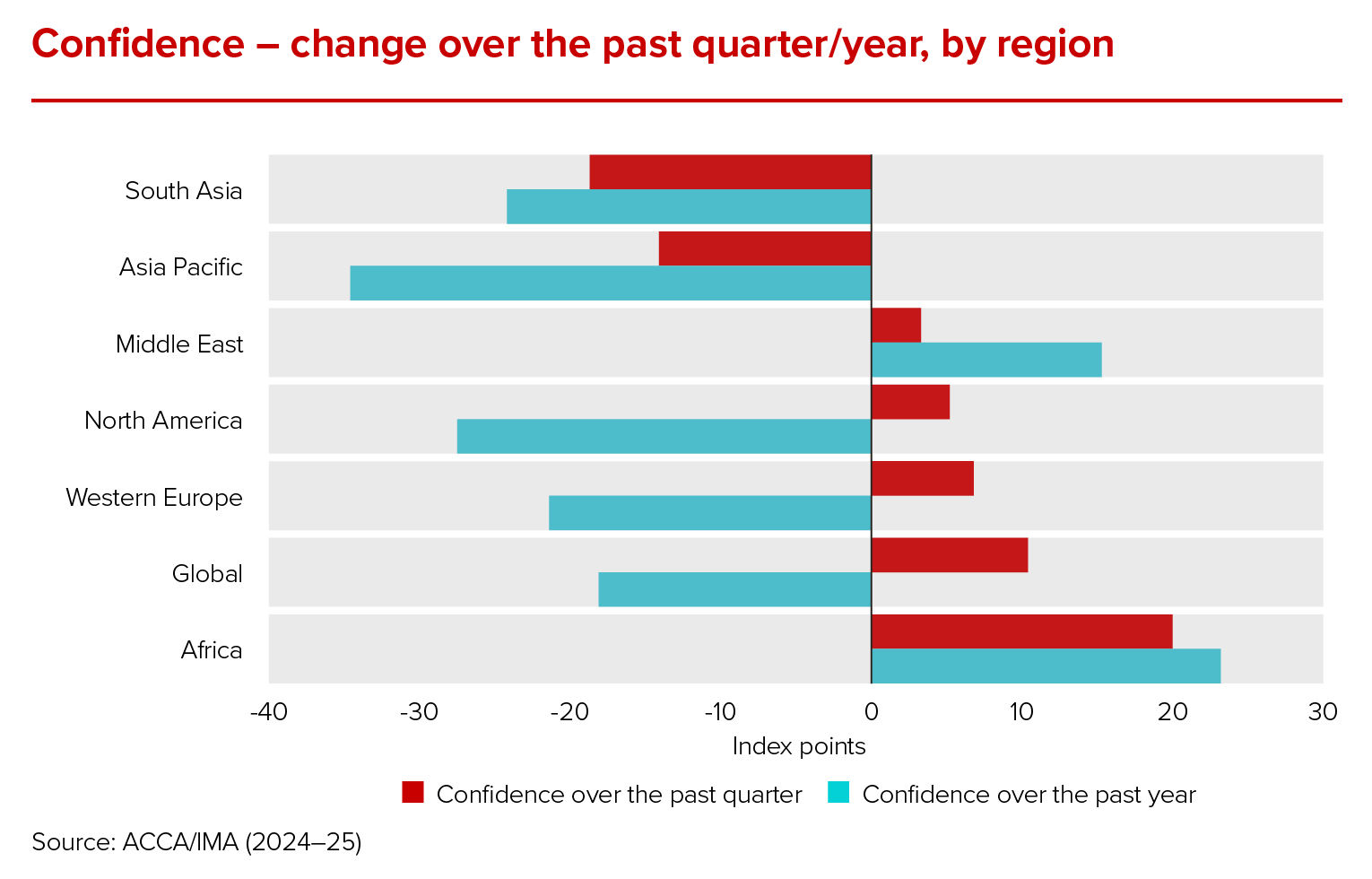
The latest Global Economic Conditions Survey (GECS), released on July 22 by the Association of Chartered Certified Accountants (ACCA) and the Institute of Management Accountants (IMA), reveals that confidence among accountants rose in the second quarter of 2025, its first uptick since the second quarter of last year. While the global confidence index hit its highest level since Q3/2024, sentiment across the profession remains fragile, with most indicators reflecting continued caution in the face of geopolitical and economic uncertainty.

Global business confidence remains fragile despite Q2 uptick
Photo: ACCA

The survey showed modest declines in both the New Orders and Capital Expenditure indices. Although the New Orders index is holding at its historical average, capital spending remains slightly below trend – continuing patterns observed since the start of the Ukraine conflict in early 2022. In contrast, the Employment Index showed a mild improvement and is now close to its long-term average, suggesting continued resilience in labour demand.

Among major regions, North America saw a slight recovery in confidence, supported by improving sentiment in the US. However, overall levels remain weak by historical comparison. Western Europe also recorded a moderate increase, driven in part by a continued rebound in UK sentiment following a record low in late 2024.

Asia-Pacific, however, posted a sharp decline in confidence in Q2/2025, reversing gains from the previous quarter. The regional fall was led by a drop in new orders and employment sentiment, likely reflecting growing concerns over the impact of rising US tariffs and the outlook for global trade. Capital investment edged higher but remains historically subdued.

Global business confidence remains fragile despite Q2 uptick

Jonathan Ashworth, chief economist at ACCA, noted that global growth remained relatively resilient in the first half of the year, despite the headwinds.

“While the key GECS indicators are not pointing to a global economy in robust health, neither are they signalling an impending downturn,” he said. “That said, rising tariffs and mounting uncertainty will likely weigh on global growth momentum in the second half of 2025.”

Alain Mulder, senior director for Europe Operations and Global Special Projects at IMA, added that cost pressures appear to be easing in some regions, albeit unevenly.

“North American respondents noted a slight reduction in operating cost increases, but the level remains elevated, raising the risk of further price adjustments by businesses in the months ahead,” he said.

Mulder also warns that persistently high inflation could complicate monetary policy decisions by the US Federal Reserve if growth slows and labour markets weaken.

In a shift in priorities, geopolitical risk emerged as the top concern for accountants globally in Q2/2025, overtaking economic uncertainty and regulatory compliance, which were tied in second place. Talent shortages and cybersecurity risks, while still relevant, fell slightly in prominence. Climate change, fraud, and supply chain disruptions were ranked lower, suggesting that macro-level uncertainty now dominates boardroom agendas.

In the Asia-Pacific region specifically, the renewed deterioration in confidence underscores the region’s vulnerability to rising protectionism and a slowing trade environment. The sharp rise in concerns about customer insolvency also mounts signals corporate stress, with financial professionals growing increasingly cautious.

The report concludes that while the near-term outlook is not dire, the accountancy profession, often a bellwether for broader economic sentiment, remains deeply aware of the risks posed by rising costs, political instability, and ongoing trade disruption.

ACCA urges businesses to prioritize climate resilience as COP29 summit opens ACCA urges businesses to prioritize climate resilience as COP29 summit opens

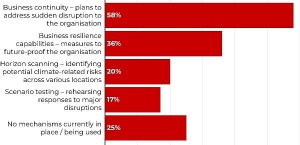
The Association of Chartered Certified Accountants (ACCA) unveiled its latest report on November 11 titled “Weathering the storm: Building resilience against climate disruptions”, exposing widespread neglect of climate risks as many organizations fail to update business continuity plans or invest in resilience measures.

Global accountants flag risks as confidence plummets Global accountants flag risks as confidence plummets

Confidence among accountants and finance professionals falls sharply amid a highly uncertain 2025.

AI reshapes accounting from automation to human strategic influence AI reshapes accounting from automation to human strategic influence

The latest report from the Association of Chartered Certified Accountants points out that accountants can thrive in an AI-dominated workplace, just as they have done in other tech revolutions.

North-central Nghe An province has experienced a meteoric rise over recent years to become a key FDI destination.

According to the former Ministry of Planning and Investment, now part of the Ministry of Finance, north-central Nghe An province attracted over $1.74 billion in FDI in 2024, up 8.8 per cent year-on-year. The province licensed 19 new projects worth $867.8 million and saw additional capital of $881.76 million into 14 existing projects, securing its spot in the top 8 nationwide for the third consecutive year.

In early 2025, Nghe An approved the VSIP Nghe An 3 industrial park project from Singapore’s Sembcorp, covering 181 ha with $2.5 million in capital, following VSIP 1 and 2. Meanwhile, Thailand’s WHA Group received approval for the second phase of the WHA Industrial Park, on 183.37 ha and with $50 million in capital, from the Prime Minister under Decision No. 1706/QD-TTg dated December 31, 2024. Both aim to develop clean, well-connected industrial infrastructure to attract high-quality secondary investors.

From underdog to FDI destination

Nghe An’s rise has been striking. Once considered a lesser-known player on Vietnam’s investment map, it has rapidly emerged as one of the country’s most compelling destinations for FDI. With the largest land area in Vietnam, the province offers vast and affordable industrial land, making it a competitive area compared to high-demand localities such as Hanoi and the northern port city of Hai Phong and nearby Quang Ninh province.

Strategically positioned within the Northern Technology Corridor, which accounts for 75 per cent of Vietnam’s high-tech enterprises, Nghe An also benefits from a population of 3.4 million, strong educational institutions, and a growing pool of skilled workers.

Back in 2017, Nghe An ranked just 33rd nationwide in FDI attraction. By 2023-2024, however, it had surged into the top 8, and has begun accelerating its industrial land development strategy and policy reforms, paving the way for a new wave of strategic investments. It now hosts 169 valid FDI projects with total registered capital of $5.68 billion; a testament to both Vietnam’s open-door FDI policy and the province’s proactive approach to investor engagement.

Crucially, the province’s forward-looking policies have laid the foundation for a dramatic transformation in its FDI profile. Notably, Nghe An has expanded its planned industrial land area from 20,776 ha to 79,731 ha, a 3.8-fold increase. By the end of this year, it is expected to offer approximately 1,500 ha of clean, ready-to-lease land to foreign investors.

Policy incentives and administrative reforms

To enhance its appeal among foreign investors, Nghe An has actively rolled out a comprehensive range of investor-friendly policies and incentives, positioning itself as one of Vietnam’s most dynamic destinations for FDI.

The province has accelerated administrative reforms in recent years, significantly reducing processing times and streamlining investment procedures. The establishment of the Southeast Economic Zone (SEZ) has provided a more favorable legal and operational framework, enabling investors to handle licensing and documentation with greater efficiency.

Nghe An also conducts regular investment promotion campaigns, both domestically and internationally, while capitalizing on its competitive advantage of low-cost, high-quality human resources.

The province is home to six universities, eleven colleges, and 70 vocational training institutions, enabling it to supply over 45,000 workers annually, more than 65 per cent of whom are trained; a key advantage for FDI enterprises seeking to establish manufacturing operations.

In addition to national-level incentives, Nghe An also offers four key provincial-level support programs aimed at reducing initial investment costs.

First, investment procedure support. The provincial budget covers up to 50 per cent of investment procedure costs, to a maximum of VND200 million ($8,000) per project.

Second, land leveling support. Up to 50 per cent of site leveling costs are subsidized in accordance with the Nghe An Provincial People’s Council’s Resolution No. 05/2021/NQ-HDND dated August 13, 2021, on investment support policies in Nghe An in the 2021-2025 period.

Third, infrastructure development support. Financial assistance is provided for the construction of roads and drainage systems up to the boundary of the project site.

Fourth, worker training support. A one-time subsidy of VND2 million ($80) per worker is available to help businesses train new employees.

These incentives support Nghe An’s strategic shift from broad-based investment to high-value, quality FDI, with a bold target of $10 billion in FDI by 2028, particularly in high-tech, smart manufacturing and environmentally-sustainable industries.

Solid infrastructure amid challenges

Nghe An’s well-developed transport and logistics infrastructure is one of the key pillars in its strategy to attract FDI. The province boasts a comprehensive road network, with 16 national highways, including critical routes such as National Highways 1A, 7, and 48, along with 39 provincial roads. This integrated network ensures seamless connectivity across the province and to other major economic hubs in Vietnam.

Complementing the road network is the North-South railway line, which runs for 94 km through Nghe An, and an 82 km stretch of coastline featuring Cua Lo and Dong Hoi deep-water ports, which are capable of berthing vessels of up to 30,000 tons, significantly enhancing freight handling capacity for industrial and export-oriented enterprises.

Vinh International Airport also plays a strategic role, offering direct flights to Hanoi, Ho Chi Minh City, Da Nang, and international destinations such as Thailand, Singapore, and Japan, providing rapid connectivity for investors and businesses alike.

However, despite its growing appeal, Nghe An still faces challenges, particularly in infrastructure and workforce readiness.

Capital flows also remain largely concentrated in large-scale industrial manufacturing. Sectors where Nghe An holds untapped potential – such as high-tech agriculture, value-added product chains, marine tourism, eco-tourism, and community-based tourism – have yet to attract significant investment. Unlocking these areas will be key to ensuring more balanced and sustainable economic development aligned with the province’s natural advantages and competitiveness.

FDI roadmap

From a modest player to a rising star on Vietnam’s FDI map, Nghe An is steadily transforming into a strategic engine of growth in the north-central region. The province’s long-term vision, green industrial development, and investor-friendly reforms are laying a solid foundation for a breakthrough phase in foreign investment attraction by 2030.

With a strong emphasis on high-tech and sustainable manufacturing, the provincial roadmap for 2025-2030 outlines several key priorities. To meet the demands of large-scale, high-value projects, Nghe An is accelerating investment in core infrastructure. These efforts include the development of deep-water ports to enhance regional logistics and global connectivity; the expansion and modernization of Vinh International Airport, with runway upgrades scheduled from July to December this year; and ongoing improvements to road, rail, and logistics corridors connecting Nghe An with key economic zones in northern and central Vietnam.

The province is also scaling up the supply of clean, ready-built industrial land. This includes the second phase of the WHA Industrial Park, with further expansion already planned; VSIP Nghe An 3, on 181 ha; and the modernization of existing clusters such as Nam Cam and Dong Hoi, meeting international standards for smart, eco-friendly manufacturing.

With streamlined investor support mechanisms and a proactive provincial government, Nghe An has set an ambitious target of attracting $10 billion in cumulative FDI by 2028. The province is firmly focused on high-tech industries, smart manufacturing, and green growth, positioning itself as a key driver in Vietnam’s next-generation industrial landscape.


From the perspective of a long-term investor in Vietnam, since 2017, as the WHA Corporation enters a new phase of expansion of its industrial park in Nghe An, Ms. Jareeporn Jarukornsakul, Chairwoman of the Executive Committee and Group CEO, believes the province is emerging as a magnet for smart, eco-friendly manufacturing.

WHA’s journey in Nghe An began in 2017, when the province ranked just 33rd nationwide in terms of FDI attraction. Today, thanks in part to WHA’s presence and investment in industrial infrastructure, Nghe An is ranked among the top investment destinations in the country. “Our industrial parks have been instrumental in elevating Nghe An’s national profile,” she affirmed.

WHA’s competitive edge lies in its smart eco industrial park model, an integrated development approach that meets international infrastructure standards while prioritizing environmental sustainability. Key features already operational in Nghe An include a chemical-free biological wastewater treatment system that minimizes environmental impact; renewable energy systems, including solar power for both WHA’s operations and its tenants; and a centralized control room for real-time monitoring of environmental indicators such as air and water quality, traffic, and safety metrics. “Our parks are anchored in three core pillars: world-class design and utilities, operational reliability, and environmental care,” Ms. Jarukornsakul explained. “These innovations not only support WHA’s sustainability goals but also enable our customers to meet increasingly stringent global ESG expectations.”

To date, WHA has attracted over $1.3 billion in investment from global manufacturers, including Goertek, Foxconn, and Sunny Optical. “This momentum is the result of close and effective cooperation with provincial authorities, from the People’s Committee and Dong Nam Economic Zone Authority to district and commune-level leadership,” she added.

Riding this wave of investor confidence, WHA has secured approval for a 184 ha expansion, with site clearance scheduled to begin this year. “And this is just the beginning,” she said. “We are committed to scaling up our investment in Nghe An in partnership with the local government.”

(* )Dr. Nguyen Thi Bich Hang is a lecturer at the Finance and Banking Department, Nghe An University

The City People’s Committee has assigned local departments and agencies to research and develop policies to support investors with the construction of technical and social infrastructure within the Free Trade Zone.

Da Nang city in Vietnam’s central region has issued a plan to implement the Prime Minister’s Decision No. 1142/QD-TTg, dated June 13, 2025, regarding the establishment of the Da Nang Free Trade Zone.

Under the  plan, the Da Nang City People’s Committee requires immediate implementation of tasks for five locations where development can begin right away. These tasks include adjusting planning at all levels and ensuring compliance with existing regulations and land-related procedures within the Free Trade Zone’s boundaries.

The five locations are: Location 2 (a 77-ha portion of the Lien Chieu Industrial Park in Hai Van Ward), Location 3 (a 500-ha area in Hai Van Ward), Location 5 (a 90-ha area in Ba Na Commune, located within the Ba Na Suoi Mo tourist complex), Location 6 (a 154-ha area in Ba Na Commune, designated as a functional zone within the Suon Doi urban subdivision, and Location 7 (a 401-ha area spanning Ba Na and Hoa Vang Communes).

In addition to these sites, a site clearance plan must be urgently developed for two other areas designated as Location 1 and Location 4, which are densely populated.

The City People’s Committee has assigned local departments and agencies to research and develop policies to support investors with the construction of technical and social infrastructure within the Free Trade Zone. This includes creating policies to assist strategic investors with the high costs of site clearance in the populated areas.

Furthermore, the city will develop a set of criteria for selecting strategic and secondary investors, organize investment promotion activities, and coordinate these efforts with the Da Nang Financial Center project.

In the first half of 2025, South Korea remained one of the top three destinations for Vietnamese labor, alongside Japan and Taiwan (China).

Starting in 2026, South Korea will implement a 2.9% increase in its minimum wage, a move that will also boost the earnings of Vietnamese laborers working in the country.

According to the Department of Overseas Labour under the Vietnamese Ministry of Home Affairs, South Korea’s Minimum Wage Commission recently announced that the national minimum wage for 2026 will be set at KRW10,320 ($7.48) per hour.

This represents an increase of KRW290 ($0,21) per hour, or 2.9%, compared to the current rate. Based on a standard 209-hour work month, the new minimum monthly salary for workers will be approximately 2,156,880 KRW ($1,563).

The department has disseminated this information to businesses and recruitment agencies to ensure that the rights of Vietnamese workers are protected under their labor supply contracts.

The department noted that South Korea has become a key and highly attractive labor market for Vietnam. In 2024 alone, over 13,600 Vietnamese workers relocated to South Korea for employment.

In the first half of 2025, South Korea remained one of the top three destinations for Vietnamese labor, alongside Japan and Taiwan (China), welcoming more than 5,600 workers. For Vietnamese nationals, South Korea is a preferred choice due to its high income levels and cultural similarities.

The online exhibition will run concurrently with the physical event and will remain active for an additional month afterward.

The 2025 Vietnam OCOP Export Fair (VIETNAM OCOPEX) is set to take place from August 1-3 in Hanoi, according to a report from the Vietnam News Agency.

This large-scale event will feature 300 booths from nearly 200 exhibitors, showcasing thousands of OCOP-certified products from 34 provinces and cities across Vietnam.

OCOP stands for “One Commune, One Product”, a program focused on developing the rural economy by promoting unique, high-quality products from each commune or village. It aims to boost local economies, enhance product quality, and preserve local culture and traditions.

A diverse range of goods will be on display, including tea, coffee, cashews, artisanal handicrafts, medicinal herbs, agarwood, essential oils, turmeric starch, various agricultural and processed foods, bird’s nest, and beauty products like shampoo, conditioner, and serums.

The event is a major trade promotion initiative, co-hosted by the Ministry of Industry and Trade, the Ministry of Agriculture and Environment, the Hanoi People’s Committee, and the Vietnam Cooperative Alliance.

The primary goal of VIETNAM OCOPEX 2025 is to help Vietnamese OCOP producers strengthen their position in the domestic market while boosting exports. The fair aims to integrate Vietnam’s key and advantageous OCOP products into foreign distribution networks, enabling deeper participation in global value chains and proactive economic integration.

In a significant technological advancement, the physical fair will be complemented by the OCOPEX 2025 Online Exhibition. This marks a breakthrough in trade promotion, as the event will be fully digitized for the first time on the B2B e-commerce platform Arobid.com, a platform developed by Arobid’s team of tech engineers.

The online exhibition will run concurrently with the physical event and will remain active for an additional month afterward.

This extended timeframe provides continuous access for domestic and international businesses, partners, and visitors to explore digital booths, find B2B partners, conduct negotiations, and place orders. It will also feature an effective, transparent, and reliable B2B matching program to connect suppliers with potential buyers.

BANGKOK, THAILAND – Media OutReach Newswire – 24 July 2025 – As artificial intelligence redefines how stories are told, trust is built, and reputations are managed, PRCA Thailand is calling on communicators, business leaders, and curious minds to join a first-of-its-kind national conversation. The inaugural PRCA Thailand Conference will take place on 6th August 2025 at SCBx NEXT Tech, Siam Paragon, under the theme “AI: Truth, Trust and Thailand.”
This bilingual, half-day event offers a rare opportunity to hear from Thailand’s top PR, tech, and business leaders as they unpack what AI means for the future of communication. From deepfakes and data ethics to real-world PR case studies and insights into Thai public opinion, the conference will equip attendees with fresh perspectives, practical tools, and expert guidance for navigating the AI era with clarity and integrity.
At the heart of the programme is the launch of a new PRCA APAC x YouGov study, revealing how AI is already influencing trust, media, and behaviour in Thailand. The findings will be presented by Wiwat (Alee) Khamsawai and Krishkanok (Kayla) Nima of Vero.

PRCA 2

Following this, a special fireside chat will feature Media OutReach Newswire, Founder and CEO Jennifer Kok and Dr. Karine Lohitnavy, Chair of PRCA Thailand and Founder of Midas PR. As the event’s Gold Sponsor, Media OutReach Newswire will lead the discussion titled ‘Viva La Press Release! Old Format, New Tech.’ This dynamic session will explore how digital transformation is breathing new life into the traditional press release, expanding its reach, deepening its impact, and redefining its role in today’s AI-powered communications landscape.

Speaker Narongyod Mahittivanicha, Founder of TWF Agency and Vice President of the Artificial Intelligence Association of Thailand, will explore how AI is transforming PR strategy at every level, from content to crisis management.
Dynamic panel sessions will follow, featuring leaders from Xponential Co, Microsoft Thailand, SCBx, and Predictive, with moderation by respected industry voices including Edelman Thailand’s Vorasit Turongsomboon and digital creator Tossapol Leongsuppon.
Dr. Karine Lohitnavy, Chair of PRCA Thailand and Founder of Midas PR, commented: “This conference comes at a pivotal moment for the communications industry in Thailand. AI is rapidly influencing how people perceive truth, build trust, and engage with information. Through data, discussion, and thought leadership, this event will help PR professionals, decision-makers and those on the front lines of communications, in all its forms, to better understand and respond to these shifts.”
Conference Details:

  • Date: 6 August 2025
  • Time: 1:30 PM to 5:30 PM
  • Venue: SCBx NEXT Tech, Siam Paragon, Bangkok

The PRCA Thailand Conference 2025 highlights PRCA Thailand’s commitment to promoting ethical, innovative, and locally relevant communications practices in Thailand, as well as fostering dialogue on emerging technologies that are shaping the future of the industry.
For more information and tickets, visit: https://prca-conference.org/thailand-conference-2025

The issuer is solely responsible for the content of this announcement.