Vietnam has charted a path towards double-digit, sustainable growth by 2030 through innovation, reform, digitalization, and strategic productivity improvements.

Amid numerous challenges stemming from global instability, rapid technological advancements, and climate change, Vietnam must undergo a deeper and more robust transformation of its growth model, anchored in science and technology, innovation, and the development of a high-quality workforce. Institutional improvements, economic restructuring, enhancements to the business and investment environment, increased investment in research and development (R&D), and the strengthening of science and technology capabilities are key factors that will determine the country’s ability to secure rapid and sustainable growth.

The Party and the State have set a target of achieving a growth rate of 8 per cent or higher this year and then double-digit growth during the 2026-2030 period, with the goal of joining the ranks of upper-middle-income countries by 2030 and high-income countries by 2045. The pursuit of double-digit economic growth is not only a strategic aspiration but also a measure that reflects the country’s vision, determination, and capacity for macro-economic management.

Driving sustainable growth

Vietnam is facing an urgent need to enhance its competitiveness, restructure its economy, and fully leverage opportunities from international economic integration to achieve its sustainable development goals. However, the path to realizing the ambition of double-digit growth poses multiple challenges in terms of institutional frameworks, resources, quality of growth, workplace productivity, science and technology, and the internal capacity of enterprises.

Moreover, the global landscape is undergoing major shifts, such as geopolitical tensions, evolving policies among major powers, digital transformation, supply chain realignment, and the demand for green and sustainable development, which all require that Vietnam adopt flexible, effective, and breakthrough development strategies.

While Vietnam has made efforts to shift towards a growth model based on science, technology, and innovation, limitations in human resources and restricted investment resources continue to hinder breakthroughs in this regard.

Experts warn that without bold policy breakthroughs, Vietnam’s economic growth may continue to rely heavily on exports and FDI, resulting in only moderate growth rates and limited prospects for breaking out of the middle-income trap. Transforming the growth model to strengthen internal capabilities and mitigate external risks has become imperative in the current context.

Dr. Dang Duc Anh, Deputy Director of the Institute for Policy and Strategy Research, has identified five key limitations in the quality of growth and its contribution to economic expansion.

First, workplace productivity growth has been inconsistent and shows signs of slowing.

Second, the contribution of Total Factor Productivity (TFP), which reflects efficiency gains in capital and labor use due to technological upgrades, production rationalization, management improvements, and workforce skills enhancement, remains low, especially in high-potential localities. According to the Asian Productivity Organization (APO), Vietnam’s TFP index has increased 1.17-times over the past 50 years, lower than Malaysia (1.69) and Singapore (1.63) in the ASEAN-4 but higher than Thailand (1.04) and Indonesia (1.05). In comparison, China’s TFP index rose 2.52-times in the 50-year period, Japan’s 1.4-times, South Korea’s 2.09-times, and the US’s 1.4-times. Limited investment in technology and innovation has resulted in weak science and technology capacity, with no significant productivity breakthroughs. Major cities such as Hanoi and Ho Chi Minh City, despite having the conditions to improve growth quality, have seen only modest results. Workplace productivity growth in these cities remains well below targeted levels. The manufacturing and processing sector, deemed a growth driver, has shown limited and unstable productivity gains, with a declining trend in recent years.

Third, the efficiency of investment capital use remains low, limiting improvements in growth quality. Though Vietnam’s Incremental Capital-Output Ratio (ICOR) has improved, it is still relatively high against many countries and territories in the region and the world. Compared to countries and territories transitioning towards high-income status or investing heavily in infrastructure, such as China, South Korea, Thailand, and Malaysia, Vietnam’s ICOR is significantly higher. Even within the same development stage, Vietnam’s ICOR surpasses that of many ASEAN nations. Additionally, while it has deeply integrated into the global economy and attracted large volumes of FDI, the role of FDI in improving productivity and growth quality remains limited. The impact of international trade on strengthening the science, technology, and innovation capacity of domestic enterprises has also been modest.

Fourth, the quality of Vietnam’s workforce has improved slowly, with a shortage of highly-skilled workers. Though the proportion of trained workers with certificates or degrees has increased, it remains low relative to the total workforce. There is a lack of skilled, technically-trained workers, and the economy is facing a shortage of highly-qualified professionals to meet the demands of digital transformation. The trend of major corporations establishing their own universities and vocational colleges highlights the inadequacies in the training quality of existing higher education and vocational institutions.

Fifth, the level of technological application, innovation, digital transformation, and technological capabilities of Vietnamese enterprises remains very limited. Efforts to drive growth based on science, technology, and innovation are progressing slowly, with limited results. The manufacturing and processing sector still relies on low technology or is mainly involved in assembly stages, generating low added value. The technological and digital capabilities of enterprises remain underdeveloped, and are unable to keep pace with global trends. Vietnam’s readiness for digital transformation and the adoption of key technologies from Industry 4.0 remains low.

In analyzing factors that will impact the quality of economic growth to 2030, experts believe that beyond geopolitical tensions and global power rivalries, the digital technology revolution will be a crucial driver of higher-quality growth. Additionally, the imperative of sustainable development is forcing Vietnam to enhance its growth quality. Most importantly, institutional reform plays a pivotal role in this transition.

Experts have noted that while Vietnam’s economic growth quality has shown positive changes over the past decade, reflected in improved workplace productivity and capital efficiency and the increasing contribution of TFP to growth, progress has not yet met expectations. Workplace productivity growth has stalled, innovation and technological adoption remain limited, and investment capital is still used inefficiently compared to the country’s regional peers.

Given the numerous challenges, from global instability and rapid technological shifts to climate change and a fading demographic dividend, Vietnam must shift to a deeper, more robust growth model based on science, technology, innovation, and high-quality human resources development.

Improving institutional frameworks, restructuring the economy, enhancing the investment climate, investing in R&D, and building up scientific and technological capacity will be key determinants of Vietnam’s ability to sustain rapid and sustainable growth. Enhancing growth quality is not only a necessity but the only viable path for Vietnam to escape the middle-income trap and achieve rapid, sustainable development in the decades to come.

According to Dr. Duc Anh, to achieve an average annual growth rate of 10 per cent or more during the 2026-2030 period, Vietnam’s workplace productivity would need to grow by 8.1-8.6 per cent annually. With TFP contributing an average of 55 per cent to growth, total social investment would need to increase by 8.6-9.3 per cent a year. This would correspond to an investment-to-GDP ratio of 36.4-40.8 per cent.

Building on reform and innovation

Acknowledging the immense challenges from both external and internal environments, experts have emphasized that Vietnam must adopt appropriate macro-economic policies that leverage domestic strengths while mitigating risks from global macro-economic instability and geopolitical tensions.

A consistent approach is needed to achieve high and sustainable economic growth by 2045, one that maintains macro-economic stability, establishes appropriate and flexible growth scenarios with risk control mechanisms, enhances workplace productivity, assesses the environmental and social impacts of growth targets, and identifies growth drivers from both aggregate supply and demand.

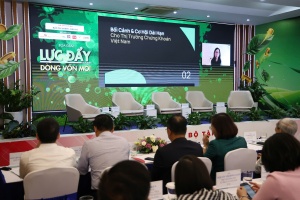
At an economic growth roundtable held in early June, Associate Professor Pham The Anh from the National Economics University proposed that Vietnam develop a concrete long-term plan, supported by policies on taxation, credit, and business environment tailored to priority industries with competitive advantages. At the same time, it is essential to strengthen the training of high-quality human resources and increase investment in R&D. Moreover, investment should be selectively channeled into high-impact infrastructure projects, avoiding fragmentation and ensuring alignment with strategic priorities. Mobilizing resources for major public investment projects requires restructuring expenditure and identifying sustainable revenue sources.

In terms of productivity, which is considered the most crucial growth driver, necessary solutions include structural transformation, efficiency enhancements, extensive growth, and innovation.

According to the Institute for Policy and Strategy Research, effectively implementing the “Four Pillars” of Resolutions (Resolutions No. 57, 59, 66, and 68), along with reforming the administrative apparatus and restructuring central and local governments towards greater efficiency, performance, and effectiveness, will create favorable conditions for improving growth quality and achieving breakthroughs in productivity.

Mr. Nguyen Canh Cuong, former Trade Counsellor in France and the UK, Minister Counsellor in Belgium and the EU, and Lecturer at the University of Economics, Vietnam National University, emphasized: “To achieve rapid and sustainable development, it is essential to identify and synchronously implement key factors in a substantive and effective manner.”

One of the critical pillars, he believes, is the development of high-tech industries and innovation. Vietnam must accelerate the transition from a labor-intensive industrial model to a knowledge-based, clean technology-driven economy. Strategic sectors such as semiconductors, robotics, electric vehicles, new materials, and digital technologies should be prioritized, with clear investment strategies in R&D and stronger links between enterprises, research institutes, and universities.

In parallel, developing green industries and a circular economy is vital to realizing Vietnam’s net-zero emissions commitment by 2050. This requires the synchronized development of renewable energy, electrified transportation, sustainable consumption, and infrastructure to support the circular economy model.

Mobilizing financial resources from society and promoting green finance are among the critical levers for ensuring sustainability in development. Solutions include developing the capital market, expanding public-private partnerships (PPPs), and enhancing the application of environmental, social, and governance (ESG) criteria in credit appraisal and public investment allocation.

He also stressed that comprehensive digital transformation plays a pivotal role in improving productivity and the overall efficiency of the economy. The goal is for the digital economy to contribute around 30 per cent of GDP by 2030. To reach this, core technologies such as AI, big data, and the Internet of Things (IoT) must be deeply integrated into production, business, and public services, supported by the development of national digital infrastructure and improved digital skills in the workforce.

In addition to high-quality human resources, Mr. Cuong also emphasized that institutional reform and improved governance efficiency are foundational conditions for ensuring the success of all development efforts.

To realize rapid and sustainable development, Vietnam needs a comprehensive strategy that integrates multiple pillars: innovative industrialization, modern agriculture, cultural and tourism services, a resilient domestic market, and effective institutions. According to Mr. Cuong, the success of this strategy will not only depend on sound policymaking but also on execution capacity and close coordination between the government, businesses, and society at large.

Strategic breakthroughs and new growth drivers

During discussions on rapid and sustainable growth at the ninth session of the 15th National Assembly (NA), Deputy Tran Hoang Ngan from Ho Chi Minh City analyzed that over nearly 40 years of “Doi Moi” (Economic Renewal), Vietnam’s economy has maintained continuous growth, with its highest annual rate recorded in 1995, of over 9.5 per cent. However, during that period, the country was affected by several external shocks, such as the Southeast Asian financial crisis in 1997 and the global financial crisis and economic recession in 2008.

To ensure rapid and sustainable growth in this new development phase, economist Tran Hoang Ngan has emphasized the need for fundamental, long-term strategic solutions to reduce the impact of external shocks.

First, Vietnam must persist with its three strategic breakthroughs: institutional reform, infrastructure development, and human capital. Regarding institutions, the Party General Secretary has identified institutional bottlenecks as the root of all other constraints. The Government and National Assembly have been actively working to improve the institutional framework, particularly the socialist-oriented market economy. The ninth session of the NA passed dozens of laws and resolutions of great significance, institutionalizing the Party’s orientations and policies through the “four strategic pillars” and Resolution No. 60-NQ/TW from the 13th Party Central Committee.

Second, restructuring the three traditional growth drivers, including exports, investment, and consumption, must proceed. With regard to consumption, more attention should be paid to the domestic market, especially the consumer base of 100 million people.

Third, unlocking three new growth drivers: science and technology, innovation and digital transformation, and new development spaces supported by the NA resolution on reorganizing 34 provincial-level administrative units. With a compatible institutional framework and synchronized infrastructure investment, these three new drivers will help accelerate growth in the time to come.

To reduce vulnerability to external shocks, Vietnam must maximize its inherent potential and advantages, particularly in agriculture, the marine economy, tourism, and service sectors such as banking and finance.

Sharing this view, Deputy Le Huu Tri from south-central Khanh Hoa province emphasized that to achieve the country’s growth goals it is essential to prioritize economic expansion, maintain macro-economic stability, and control inflation. He stressed the need to stay focused and persistent in implementing the three strategic breakthroughs, especially by continuing to build and improve institutions aimed at more transparent policies, seamless infrastructure, and smart governance. This will help reduce compliance and logistics costs, enhance workplace productivity, and improve competitiveness.

In addition, he advocated for accelerating the development of strategic infrastructure, concentrating resources on key projects to drive regional and inter-regional economic development. There must also be a strong focus on training and developing a high-quality workforce capable of meeting the demands of the digital economy and global integration, while also improving the efficiency and effectiveness of law enforcement and social governance.

Several other opinions have also highlighted the importance of tapping into new growth drivers such as the green transformation, the circular economy, and innovation, especially in the context of Vietnam’s commitment to achieving net-zero emissions by 2050. This is not only a responsibility but also a major opportunity for the country to change its growth model. At the same time, the development of the digital economy, digital infrastructure, and open data must be considered foundational platforms for achieving sustainable economic growth in the digital age.


 

Hanoi will also officially implement a fare increase for its urban railway on both Line 2A and Line 3.1, effective August 1.

Starting August 1, Hanoi will pilot a virtual ticketing system for daily and weekly passes on its two urban railway lines: Line 2A (Cat Linh – Ha Dong) and Line 3.1 (Nhon – Hanoi Railway Station).

The new virtual tickets will be linked to a passenger’s personal account and displayed directly on their smartphone via the “HN Traffic Ticket Card” (Thẻ vé giao thông HN) application.

To use the service, passengers can download the app, create an account, select their desired pass, and complete the payment via QR code through their banking app. The ticket is then displayed on their phone for presentation at station gates. For security, the QR code on the ticket automatically refreshes every 30 seconds and features a flashing “Tramoc” logo to verify its authenticity.

This digital system is expected to reduce printing and distribution costs while offering passengers greater convenience. It allows for easy tracking of travel history, quick registration, and provides a contactless experience.

Concurrently with the launch of the virtual ticket pilot, Hanoi will also officially implement a fare increase for its urban railway on both Line 2A and Line 3.1, effective August 1.

However, the city will continue its existing policy of providing free travel for specific groups, including individuals with meritorious service to the nation, persons with severe disabilities, and children under the age of six.

Vietjet outperforms targets, wins Long Thanh project bid

According to its Q2 financial report released on July 31, Vietjet recorded aviation revenue of VND17.68 trillion (approximately $674.46 million), with pre-tax profit reaching VND775 billion (approximately $29.57 million), an increase of 52.3 per cent on-year.

Vietjet achieved total consolidated revenue of VND17.89 trillion (approximately $682.29 million) and a pre-tax profit of VND815 billion (approximately $31.09 million), representing a remarkable increase of 151.5 per cent on-year. Ancillary revenue contributed over VND6.89 trillion (approximately $262.98 million), significantly boosting overall revenue.

For the first half of 2025, Vietjet reported aviation revenue of VND35.6 trillion (approximately $1.35 billion) and a pre-tax profit of nearly VND1.6 trillion (approximately $61.04 million), up 37 per cent on-year. Consolidated revenue reached VND35.8 trillion (approximately $1.36 billion), with pre-tax profit exceeding VND1.6 trillion (approximately $61.04 million), a 65 per cent increase on-year.

By the end of Q2, Vietjet operated a total of 154 routes (109 international and 45 domestic), completing nearly 41,000 flights and transporting 7.5 million passengers. The total freight volume transported during the quarter approached 29,000 tons.

As of June 30, Vietjet’s total assets amounted to over VND112.33 trillion (approximately $4.28 billion), with a debt-to-equity ratio of 1.76 and a liquidity ratio of 1.44, indicating strong financial health in the aviation sector. Cash reserves, bank deposits, cash equivalents, and short-term investments exceeded VND9 trillion (approximately $343.48 million), coupled with working capital limits, ensuring the company’s liquidity.

The carrier paid over VND4.53 trillion (approximately $172.74 million) in direct and indirect taxes and fees in the first half of 2025.

The airline boasted a technical reliability rate of 99.53 per cent and has been recognised by AirlineRatings as the “Worlds’ Best Ultra Low-Cost Carrier”, ranking among the safest airlines globally.

Q2 marked a new milestone in Vietjet’s strategy to expand its international network, launching direct flights from Nha Trang to three major cities in Russia: Vladivostok, Khabarovsk, and Blagoveshchensk.

In China, the airline inaugurated services connecting Hanoi and Ho Chi Minh City with Beijing, Guangzhou, and Shanghai, addressing the growing demand for travel and trade. Vietjet also expanded routes to India and Japan and increased domestic flight frequencies to Danang, Nha Trang, and Tuy Hoa.

In tandem with these positive financial and operational results, Vietjet continued to invest in and develop a modern aircraft fleet.

The airline ordered an additional 20 wide-body A330neo aircraft from Airbus during French President Macron’s visit to Vietnam, bringing its total A330neo orders to 40, making Vietjet the airline with the largest A330neo orders.

At the 2025 Paris Air Show, Vietjet placed a new order for 100 aircraft and 50 options for new Airbus A321neo aircraft. This represented the largest aircraft order at the Paris Air Show 2025, positioning Vietjet among the top 10 airlines globally with the largest orders.

Additionally, the carrier is taking charge of ground services at the country’s largest airports, enhancing service quality control, optimising operational efficiency, and providing an enjoyable experience for passengers.

The Ministry of Construction has approved Vietjet’s winning bid for the investment and construction of aircraft maintenance services at Long Thanh Airport. These projects are part of a comprehensive aircraft maintenance complex serving domestic airlines, ensuring national interests and meeting operational requirements for Long Thanh International Airport’s first phase.

Vietjet continued to assert its position as a new-generation airline with positive business results in H1, achieving separate and consolidated pre-tax profits of 78 per cent and 75 per cent of its annual plan, respectively.

These strategic moves reinforced Vietjet’s internal capabilities and also laid a solid foundation for strong growth in the latter half of 2025, aiming at sustainable development and flying higher on the global aviation map.

Vietjet posts record revenue in 2024 Vietjet posts record revenue in 2024

Expanding its international flight network to meet mounting travel demands through an ever-growing modern fleet, Vietjet reported strong revenue and profit growth in the fourth quarter and throughout 2024.

Vietjet launches Singapore – Phu Quoc route Vietjet launches Singapore – Phu Quoc route

The launch of Vietjet’s direct Singapore – Phu Quoc route marks a bold step in the airline’s regional growth strategy, reinforcing its commitment to sustainable development and strengthening economic ties between Vietnam and Singapore.

Vietjet announces new managing director Vietjet announces new managing director

Vietjet Aviation JSC has announced the appointment of Nguyen Thanh Son as the company’s managing director, succeeding Dinh Viet Phuong, leading the new age carrier in the next era of development.

The event aiming to help shape a robust national R&D strategy through international collaboration and innovation-led policies.

The Vietnam Research and Development (R&D) Forum 2025 officially opened on July 30 in the northern province of Ninh Binh, aiming to help shape a robust national R&D strategy through international collaboration and innovation-led policies.

The two-day event brings together around 100 participants, including domestic and international scientists, policymakers, and representatives from research institutes, businesses, and development agencies.

Held under the theme “Advancing Vietnam’s Future through Strategic R&D Investment,” the forum is seen as a strategic milestone in promoting the transition to a knowledge-based economy and enhancing Vietnam’s innovation capacity—key to sustainable development and strengthening the country’s global competitiveness.

Participants are focusing their discussion on three key topics, including the Vietnam R&D roadmap 2025–2030, which emphasizes financial incentives, expert networking, and strengthening industry–university collaboration; a national R&D policy framework, with proposals to establish a national R&D council, implement talent incentives, and offer tax breaks for businesses investing in R&D; and sector-specific investment action plans that aim to develop dedicated special economic zones for R&D, support professional training, and develop specialized investment funds.

According to the World Bank, Vietnam’s R&D spending rose from 0.3% of GDP in 2013 to 0.43% in 2021 – a positive trend but still below the 2-4% range seen in more developed economies.


The project is set to supply 2,197 apartments to the market, accommodating around 6,590 residents.

The People’s Committee of the northern province of Thanh Hoa has issued a decision approving the investment plan for a new apartment building project in Hac Thanh Ward, with a preliminary total investment of nearly VND5.28 trillion (over $201 million).

The project will be developed on a land area of approximately 22,568 sq.m. According to the design, the complex will feature high-rise blocks integrating residential apartments, commercial and service areas, and office space.

The development will also include a comprehensive infrastructure system, including internal roads, green spaces, outdoor parking lots, and other public facilities.

In total, the project is set to supply 2,197 apartments to the market, accommodating around 6,590 residents.

It is envisioned as a model urban area designed to meet the growing demand for housing in the locality.

The Provincial People’s Committee has clearly stated that the investor will be selected through an auction of land use rights, in accordance with land regulations.

The Thanh Hoa Land Fund Development Center has been tasked with organizing the auction plan, ensuring the process is public, transparent, and closely monitored, and will be held fully accountable to the law and the Provincial People’s Committee.

The move aims to meet the growing demand for digital payments, and curb tax evasion.

Deputy Prime Minister Ho Duc Phoc has urged ministries, sectors, and localities to intensify efforts to promote cashless payment nationwide.

In an official dispatch signed on July 30, the Deputy PM directed relevant authorities to swiftly implement measures encouraging non-cash transactions, enhance policy guidance, and promote widespread public awareness campaigns to drive adoption.

The move aims to meet the growing demand for digital payments from both citizens and businesses, curb tax evasion and financial crimes, and ensure strict enforcement of regulations.

The Ministry of Finance has been tasked with working alongside other ministries to bolster inspections and monitor State budget disbursement, ensure strict adherence to legal requirements on invoices and payment documentation for goods and services.

Authorities have been instructed to penalize promptly and firmly violations, particularly the deliberate use of cash to avoid taxes.

The State Bank of Vietnam (SBV) will coordinate with relevant agencies to expand the digital payment ecosystem. The central bank is also expected to strengthen inspection and supervision, implement anti-money laundering measures, and promote the development of payment infrastructure and financial technologies to support the nationwide shift to cashless transactions.

Government Decree No. 205/2025/ND-CP (Decree 205) amends and supplements several articles of Decree No. 111/2015/ND-CP on the development of supporting industries.

The new decree introduces a range of incentives aimed at accelerating the growth of enterprises in this critical sector.

While many experts and businesses acknowledge the importance of expanding incentives, they also stress that broader conditions are needed for the industry to thrive sustainably.

New decree paves the way for supporting industry breakthrough

A standout feature of Decree 205 is its reinforced support for research, technology application, and transfer activities related to producing prioritised supporting industry products.

Organisations and individuals involved in technological innovation are now eligible for funding from the National Technology Innovation Fund, the National Science and Technology Development Fund, the National High-Tech Development Programme, and other incentive mechanisms.

The decree also provides targeted assistance for technology application and transfer efforts aimed at manufacturing products on the government’s prioritised list for supporting industry development.

Specifically, it covers up to 50 per cent of the investment costs for machinery, prototypes, design, software, training, expert consulting, patents, technology ownership and industrial property right transfers, and result verification for joint research and technology transfer projects between businesses and scientific organisations.

Additionally, it provides up to 70 per cent THE funding for programmes that improve the quality and availability of experts and consultants in the technology application and transfer field.

In terms of human resource development, Decree 205 offers training support-,both at home and abroad, for outstanding students, lecturers, researchers, experts, managers, technicians, and skilled workers.

Funding will come from the Supporting Industry Development Programme and other workforce training initiatives.

Enterprises operating in this sector are also eligible for up to 50 per cent reimbursement of costs related to product testing, quality assessment and certification, consulting on quality standards, and the establishment and publication of internal standards, as well as certification for quality management systems.

In a recent talk with the press, Le Quoc Phuong, former deputy director of the Industry and Trade Information Centre under the Ministry of Industry and Trade, noted that although Vietnam’s industrial sector, including supporting industries, has made progress, it remains largely focused on assembly and subcontracting.

To raise the localisation rate, he emphasised, strengthening supporting industries is essential.

Phuong, however, pointed out that while expanding incentives is necessary, it is not the decisive factor for the sector’s advancement. In his view, the determining factors include institutional reform and the competitiveness of Vietnamese industrial enterprises.

Citing international experience, Phuong added, “In many countries, large firms are prohibited from producing their own components or auxiliary equipment. Instead, this space is reserved for small- and medium-sized enterprises (SMEs) specialising in supporting industries. That’s a lesson we can learn from, the country needs complementary incentive policies to empower local SMEs.”

Nguyen Trung Kien, CEO of Hanoi-based KNTECH, a company specialising in consumer electronics and technical-electromechanical services, welcomed Decree 205.

He said the new incentives would help SMEs access advanced technologies, improve product quality, and enhance their competitiveness in global markets.

“To ensure these incentives are effectively applied, authorities must strengthen oversight to prevent misuse, while also enhancing administrative capacity to better support investors. On the business side, firms need to improve their technical and financial capabilities to seize these opportunities,” Kien recommended.

According to the Ministry of Industry and Trade, Vietnam’s supporting industries have shown promising progress in recent years, fuelLed by government support policies and the proactive efforts of the business community.

The country currently has around 5,000 supporting industry businesses, supplying products domestically and exporting to key markets such as South Korea, Japan, China, and the United States. Their products include electric cables, gearboxes, and plastic components.

PPPs in science and technology pave way for private investment PPPs in science and technology pave way for private investment

New mechanisms are opening up the door for the private sector in science and technology and digital transformation in the form of public-private partnerships (PPPs).

Vietnam’s legislative breakthrough on digital assets Vietnam’s legislative breakthrough on digital assets

With legal clarity on digital assets now in place, Vietnam is poised to draw in global capital. Tran Huyen Dinh, chairman of the Fintech Application Committee under the Vietnam Blockchain Association (VBA) discussed with VIR’s Hoang Oanh how the new law could reshape fintech, blockchain, and investor confidence.

Vietnam eyes stock market breakthrough by 2030 Vietnam eyes stock market breakthrough by 2030

With bold reform and a clear strategic vision, Vietnam is positioning its stock market to become a key engine of growth and a regional financial hub by 2030.

The MoC stated that this new tax calculation will help deter speculation and prevent excessive price inflation in the real estate market.

In its latest quarterly report on the housing and real estate market, the Ministry of Construction (MoC) has put forward several key proposals aimed at curbing speculative activities and property hoarding that disrupt the market.

Specifically, the MoC has expressed its support for a policy proposed by the Ministry of Finance (MoF) to tax the net profit from real estate transactions.

This proposal is part of the draft amendment to the Law on Personal Income Tax. The MoC stated that this new tax calculation will help deter speculation and prevent excessive price inflation in the real estate market.

The MoF recently finalized the draft amendment to the law and is currently collecting feedback from other ministries, local authorities, and relevant agencies.

A key feature of the draft is the MoF’s proposal to apply a 20% tax rate on the income earned from each real estate transfer. This tax would be calculated based on the net profit (sale price minus the original purchase price and related costs), a significant change from the current system.

Under current regulations, individuals are required to pay a 2% personal income tax calculated on the total sale price of each transaction.

The draft also includes a provision for cases where the purchase price and related costs cannot be determined. In such situations, the tax would be calculated based on the final sale price and the duration for which the property was held.

The MoC also proposes  to tax vacant real estate in order to prevent speculation. 

The ongoing recovery in Vietnam’s tourism and resort real estate market is being largely led by coastal destinations.

Vietnam’s tourism and resort real estate market has faced continued headwinds since 2018, driven by both external and internal factors. Despite this, the market has been gradually regaining momentum thanks to resilient development strategies and a growing ability to adapt to shifting conditions.

To seize new revenue opportunities, resort real estate investors and hotel operators have been actively diversifying their approaches, with key trends including tapping into emerging destinations, accelerating digital adoption, enriching loyalty and guest engagement programs, optimizing investment costs, and reassessing management contracts.

Resurgence but challenges remain

According to Avison Young Vietnam, as of the end of 2024, the supply of 4-star and 5-star hotels nationwide was largely concentrated in coastal cities and provinces. Leading the way were central Da Nang city and south-central Khanh Hoa province, with 20,466 and 25,565 rooms, respectively, followed by the Mekong Delta’s Kien Giang province (now part of An Giang province), Quang Nam province (now part of Da Nang), northern Quang Ninh province, and Binh Thuan province (now part of the central highlands’ Lam Dong province).

After a subdued few years, 2024 saw a notable rebound in market activity. The average absorption rate, based on successful transactions, stood at around 57 per cent; double that of 2023. Mr. David Jackson, Principal and CEO of Avison Young in Vietnam and Cambodia, explained that tourism real estate, such as hotels, resorts, and condotels, is benefiting significantly from the resurgence of beach tourism, with Vietnam emerging as a bright spot on the global travel map.

Vietnam actually became the fastest-recovering tourism market in Southeast Asia in last year, outperforming Malaysia, Indonesia, Thailand, Singapore, and the Philippines. Total international arrivals reached around 98 per cent of pre-Covid levels, with the majority of visitors coming from South Korea, China, Taiwan, and Japan in Northeast Asia. There was also solid growth posted in arrivals from India, the US, Europe, and Southeast Asian countries. In the first quarter of 2025 alone, Vietnam welcomed over 6 million international visitors, a 134 per cent increase compared to the same period of 2019 and the country’s highest-ever quarterly figure.

According to The Outbox Company’s Vietnam Travel Landscape report for 2025, beach tourism was the most preferred type of travel among Vietnamese. At the same time, coastal destinations such as Ha Long Bay in Quang Ninh province, Da Nang, Nha Trang in Khanh Hoa province, and Phu Quoc Island in An Giang province also drew growing numbers of international visitors. In just the opening two months of this year, these destinations recorded year-on-year growth of between 14 and 27 per cent.

Mr. Mauro Gasparotti, Director of Savills Hotels Asia Pacific and in charge of Southeast Asia, highlighted a marked improvement in Vietnam’s tourism service quality. Once considered a destination for brief visits, Vietnam has successfully transformed into a place where travelers return for longer, more meaningful stays. Tourists are increasingly drawn back to destinations with distinctive local identities, enhanced by improved infrastructure, amenities, and direct flight connections. “This demonstrates Vietnam’s growing competitiveness on the global tourism stage,” he commented.

Looking ahead, he sees tremendous potential for coastal tourism real estate, especially as the Vietnamese Government has a target of welcoming 50 million international visitors by 2030 while continuing to diversify source markets.

Notably, the government has officially prioritized beach tourism development in the Strategy for the Sustainable Development of Vietnam’s Marine Economy by 2030 with a Vision to 2045. This strategy focuses on three main pillars: investing in tourism infrastructure; encouraging participation from various economic sectors in developing high-quality coastal resorts; and building out and diversifying beach tourism offerings.

However, challenges remain. “Even with a coastal spatial plan and legal framework in place, complexities around land use rights, lease durations, investment licensing, and environmental protection continue to be bottlenecks,” Mr. Gasparotti noted. He also pointed out that underdeveloped transport infrastructure and public amenities are still limiting both accessibility and the overall tourist experience, particularly during peak seasons or adverse weather conditions.

Global brands, local moves

According to Mr. Jackson, the number of international hotel brands operating in Vietnam has doubled over the past three decades, especially since 2000. Major players such as Hilton, the Radisson Hotel Group (RHG), Accor, and IHG continue to expand their footprint around the country by diversifying their service segments and elevating quality standards.

For domestic investors, partnering with international hotel operators has become a key strategy to upgrade service quality to global benchmarks and enhance their appeal among high-income travelers and international guests. This synergy has led to a noticeable increase in strategic collaborations between developers and operators in recent years.

As competition grows and the tourism sector experiences rapid transformation in the post-pandemic era, hospitality real estate investors and hotel operators are shifting their approach to capture new revenue streams and improve operational efficiency.

One significant trend is the growing focus on emerging destinations. Provinces such as Ninh Binh, Gia Lai, Quang Ngai, and Dak Lak saw impressive growth in visitor numbers from 2022 to 2024. They also boast long-term tourism potential thanks to their abundant land reserves, relatively undeveloped commercial tourism landscape, unique ecosystems, including national parks and biosphere reserves, and rich local cultures. Early entry into these markets would provide investors with a strategic advantage and long-term brand positioning.

However, sustainable development is crucial. Developers must carefully assess the environmental, economic, and social impacts of their projects, ensure alignment with master plans that balance development and conservation, and conduct thorough market research with a long-term view of supply-demand dynamics and target customer segments.

At the same time, both developers and hotel operators are ramping up efforts in digital transformation and guest engagement. They are upgrading facilities, expanding service offerings, building destination ecosystems, and personalizing experiences through digital tools. Loyalty programs are also being prioritized to retain guests and build brand affinity, especially among Millennials and Gen Z travelers, who are experience-driven and adventurous but highly cost-conscious.

Given the high capital and maintenance costs of coastal hospitality projects, often due to environmental compliance and exposure to severe weather, investors and operators are increasingly focused on cost optimization. This includes smart design choices, the use of sustainable materials, and efficient operational systems. Hotel management contracts are also being renegotiated to ensure a fairer balance of benefits and responsibilities between property owners and hotel operators.

Despite these improvements, Mr. Jackson emphasized that even the most attractive investment opportunities will not reach their full potential without strong destination marketing efforts. He stressed the need to promote cultural heritage, strengthen tourism campaigns in key source markets, and develop public-private partnerships to diversify tourism offerings.

Mr. Gasparotti, meanwhile, highlighted that Vietnam has enormous natural advantages, from its long and beautiful coastline to its highlands and mountainous regions. While the potential to attract tourists is clear, infrastructure and product quality remain decisive factors. Without improvements in these areas, even well-located projects may fall short in terms of revenue performance and competitiveness.

He also noted that now is a favorable time to explore opportunities in hospitality real estate, as the regulatory framework has become more transparent. However, success will depend on choosing the right partners, selecting well-positioned projects, and developing concrete business models that can support sustainable, long-term growth.

MOSCOW, RUSSIA – Media OutReach Newswire – 30 July 2025 – SIBUR, Russia’s largest polymer producer, has developed a new grade of polypropylene designed for use in hygiene and medical products. The company expects to sell over 1,000 tonnes of this polymer grade by the end of 2025.
The new product was created by the SIBUR PolyLab research centre and the Nizhnekamskneftekhim plant, in collaboration with the R&D team from a leading Russian manufacturer of hygiene products that supplies nonwoven materials to multinational companies.
The new polypropylene grade, PP MG182 K, has proven to be an effective alternative to traditional hygiene solutions that rely on blends of several polymer grades. Its technical properties make it suitable for supply both within Russia and to international markets as a raw material for the production of nonwoven fabrics.
Over the past two decades, the use of polypropylene-based nonwovens (spunbond fabrics) in the hygiene and medical sectors has grown considerably. Since consumers value the softness of materials that come into direct contact with the skin, manufacturers have traditionally relied on special additives to enhance the softness of polypropylene spunbond.
SIBUR has successfully developed a proprietary polypropylene copolymer that provides the required softness without the use of foreign additives that are no longer available in the Russian market. The development team also aims to further improve the material to eliminate the use of phthalates, additives facing stricter regulation in several countries. This enhancement will broaden the scope of application of the copolymer grade as well as its export potential.

The issuer is solely responsible for the content of this announcement.