Vietnam's seafood exports grow in first seven months
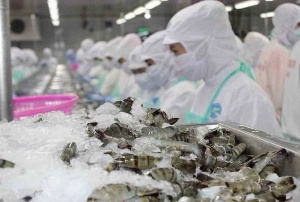
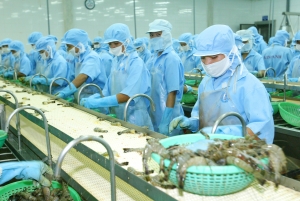
Photo: baodautu.vn

According to Vietnam Association of Seafood Exporters and Producers (VASEP), Vietnam’s seafood exports totalled nearly $6.86 billion in the first seven months of 2026, an increase of 11.5 per cent on-year. In July, seafood exports reached $1.1 billion, up 4.8 per cent compared to the same period in 2025.

China and Hong Kong remained Vietnam’s largest seafood market in July, importing more than $267 million, up 24.7 per cent on-year. During the first seven months, exports reached nearly $1.74 billion, an increase of 34.5 per cent.

Exports to the United States exceeded $159 million in July, up 6.3 per cent, while cumulative exports reached more than $1.05 billion, increasing just 0.3 per cent.

Exports to Japan totalled more than $144 million in July, rising 3.8 per cent, while cumulative exports increased 2.6 per cent. Exports to CPTPP markets reached more than $1.783 billion during the first seven months, up 8.1 per cent, making the bloc one of Vietnam’s most stable export destinations.

In contrast, exports to the EU declined 10.9 per cent in July and 2.7 per cent over the first seven months. South Korea fell 10.8 per cent in July, ASEAN declined 6 per cent, and the Middle East dropped 16 per cent.

VASEP noted that the scenario of seafood exports exceeding $12 billion in 2026 remains achievable following the $6.86 billion recorded during the first seven months. However, export growth in the remaining months of the year is expected to slow considerably from the current 11.5 per cent pace. The most immediate challenge comes from the US Section 301 tariff. The 12.5 per cent tariff imposed on Vietnam creates three concrete consequences.

First, new contracts with US buyers are likely to be renegotiated. Importers may request lower free on board prices, tariff-sharing arrangements, or shorter-term agreements.

Second, Vietnam is placed at a competitive disadvantage compared with Ecuador, India, and Indonesia, which face a 10 per cent tariff. This difference is particularly important for whiteleg shrimp, canned tuna, and standard frozen seafood products.

Third, the new tariff is applied on top of MFN duties, anti-dumping duties, and countervailing duties where applicable. Consequently, purchasing decisions will increasingly be made based on individual exporters and specific product lines rather than simple country-to-country comparisons.

“On the positive side, Vietnam has introduced regulations prohibiting the import of goods produced with forced labour, effective from early September 2026. This provides a basis for continued dialogue with the US. However, in the short term, there has been no official indication that the 12.5 per cent Section 301 tariff will be revised in the near future,” VASEP added.

Vietnam's seafood exports approach $5.8 billion in first half of 2026 Vietnam’s seafood exports approach $5.8 billion in first half of 2026

Vietnam’s seafood exports reached nearly $5.8 billion in the first half of 2026, up 12.8 per cent on-year, driven by stronger demand, market diversification, and improved product restructuring.

China imports $1.4 billion of Vietnamese seafood in first half of 2026 China imports $1.4 billion of Vietnamese seafood in first half of 2026

Stronger demand from China – Vietnam’s largest shrimp export destination – is creating fresh momentum for the industry’s growth amid continuing uncertainty in the US market.

Seafood Expo Asia draws exhibitors from four continents Seafood Expo Asia draws exhibitors from four continents

Seafood Expo Asia drew first-time exhibitors from four continents, with new national pavilions spanning wild-capture fisheries to smart aquaculture technology reflecting Asia’s growing seafood demand.

The draft decree aims to strengthen decentralisation, reduce procedures, and unlock resources for the enterprise, while ensuring transparency and strict supervision in line with market economy principles and state management.

Specific financial mechanism proposed for Vietnam Railways
Photo: VNR

The draft proposes special mechanisms for the railway industrial complex project; management, maintenance, repair, renovation, and upgrading of national railway infrastructure assets; construction of commercial and office buildings at railway stations; and investment credit incentives.

The investment preparation process for the railway industrial complex project is subject to several specific policies as follows: Vietnam Rail (VNR) is allowed to consult domestic and foreign contractors and organisations regarding technology, reference prices, and potential risks during the project preparation process; this consultation must be transparent and must not provide an unfair advantage to any supplier.

VNR is allowed to decide on the use of foreign contractors for consulting and pre-implementation activities for the project.

Regarding the performance of tasks and orders for railway industrial services and railway industrial goods of the railway industrial complex, VNR is assigned and orders enterprises in which VNR has 100 per cent invested capital to perform all or part of railway industrial services and railway industrial goods in accordance with the law.

The draft clearly states that VNR is assigned the task of commissioning its dependent and independent accounting units, and commissioning its subsidiaries to carry out repairs, renovations, upgrades, and functional enhancements to national railway infrastructure assets using the company’s own capital.

In cases where the state entrusts VNR with the management, maintenance, operation of national railway infrastructure, VNR shall implement initiatives to construct commercial service and office buildings within railway stations and on land designated for railways associated with stations through the selection of investors as stipulated in the 2025 Investment Law.

The MoF also proposes adding investment projects for the production, assembly, and procurement of various types of railway locomotives and carriages; specialised vehicles operating on railways; machinery and equipment for railway infrastructure maintenance; and mechanical components, systems, and parts for the production and assembly of locomotives, carriages, and railway transport vehicles to Section III – the list of investment credit loan projects issued with the government’s Decree No.78/2023/ND-CP from 2023, amending and supplementing a number of articles of Decree No.32/2017/ND-CP from 2017, on state investment credit.

At present, the draft is currently open for public comment on the MoF’s online portal.

Vietnam Railways restructuring plans approved Vietnam Railways restructuring plans approved

With the approval of the restructuring plan for 2026-2030, Vietnam Railways will develop into a group model, aiming to create a driving force for the industry development and attract more investment.

More opportunities for French businesses in Vietnam’s railways More opportunities for French businesses in Vietnam’s railways

Vietnamese Deputy Minister of Construction Nguyen Tuong Van on May 7 worked with a delegation of French businesses on railway investment and business opportunities.

Railway administrative procedures amended to support investment Railway administrative procedures amended to support investment

New railway industry regulations are expected to streamline administrative procedures and boost business and investment activities in the sector.

Circular 32 takes effect on 1 October 2026 and introduces important changes to the preparation, assessment and management of marketing authorisation dossiers for drugs and drug substances in Vietnam.

On 29 July 2026, the Ministry of Health issued Circular 32/2026/TT-BYT (“Circular 32”) on the marketing authorisation of drugs and drug substances for human use. Circular 32 applies to chemical drugs, vaccines, biological products, herbal drugs and drug substances. It does not apply to traditional drugs or medicinal materials.

Circular 32 will replace Circular 12/2025/TT-BYT from 1 October 2026. Although the new rules introduce additional flexibility in several areas, they also place greater responsibility on registration establishments to substantiate their regulatory approach, classify changes correctly and maintain supporting records.

Key takeaways

  • Consolidated applications and deferred submission of a Certificate of Pharmaceutical Product (CPP) are available only where all applicable conditions are met.
  • An exemption from safety and efficacy documentation does not exempt the dossier as a whole from assessment or remove other applicable documentation requirements.
  • A Certificate of Suitability to the monographs of the European Pharmacopoeia (CEP) should not be treated as standalone evidence of Good Manufacturing Practice (GMP) compliance.
  • Pending applications should be assessed individually before a registration establishment requests the application of a more favourable transitional provision.

Transitional arrangements

In principle, applications submitted before 1 October 2026 but not yet determined will continue to be processed under the rules in force at the time of submission. From the effective date, a registration establishment may request the application of provisions of Circular 32 that facilitate or simplify administrative procedures, subject to the scope and conditions of the relevant transitional provisions.

This is not an unrestricted right to choose between the old and new regimes. Businesses should assess each pending application by reference to its submission date, current status and the specific provision proposed to be applied.

Five changes businesses should note

1. Application submission and supplementary CPPs

Circular 32 permits a single application to cover multiple products where the prescribed criteria are met. The scope is expanded in certain cases involving different packaging establishments or batch-release sites. The omission of certain criteria as separate items does not, however, create an automatic right to make a consolidated submission. The applicable conditions and consistency of each product must still be verified.

In the cases specifically prescribed by Circular 32, the Drug Administration of Vietnam may accept a new marketing authorisation application without a CPP. The registration establishment must provide a written explanation and submit the CPP no later than its second supplementary submission made at the request of the receiving authority.

This mechanism defers only the timing of CPP submission. A product will remain ineligible for marketing authorisation if the CPP is not submitted on time or does not satisfy the requirements concerning the issuing authority, contents, validity or consistency with the dossier.

What businesses should review: Identify applications that may qualify for deferred CPP submission and establish controls for the applicable deadline, issuing authority, validity and dossier consistency.

2. Safety and efficacy data and reliance mechanisms

Circular 32 continues the mechanism for relying on assessments by foreign medicines regulatory authorities and differentiates data requirements according to the characteristics of the product.

For a chemical drug having the same active ingredient, strength or concentration, route of administration and dosage form as a drug authorised by a reference stringent regulatory authority (SRA) or the European Medicines Agency (EMA), but with changes to its indication, dosage regimen, bioavailability or pharmacokinetics, Circular 32 permits an appropriate data pathway. Depending on the case, this may comprise full clinical data; literature data together with the package insert or summary of product characteristics; or data prepared under clinical development guidelines for drugs with new improvements.

A chemical drug similar to a drug authorised by an SRA or the EMA, and not falling within the above group of changed or improved drugs, may be exempt from submitting safety and efficacy documentation. Circular 32 also adds an exemption for certain newly domestically manufactured drugs for the prevention or treatment of Group A infectious diseases, excluding vaccines, where all prescribed conditions are satisfied.

An exemption from safety and efficacy documentation does not remove applicable administrative, quality or bioequivalence documentation requirements, nor does it exempt the dossier as a whole from assessment.

What businesses should review: Correctly classify the product and compare it with drugs authorised in Vietnam and by an SRA or the EMA before selecting the data package and reliance pathway.

3. Quality dossiers, CEP/GMP and registered drug substances

Compared with Circular 12, a CEP is no longer listed among the documents that may independently demonstrate a drug-substance manufacturer’s GMP compliance. A CEP may still form part of the quality dossier, but it should not be used as standalone GMP evidence. Dossiers currently using a CEP for both purposes should be reassessed, and any supplementary documents required under Article 22.7 of Circular 32 should be identified.

Circular 32 also addresses electronic quality documents. Where documents in the drug-substance section are provided electronically without the drug-substance manufacturer’s seal, they may be certified with the seal of the finished-product manufacturer or the registration establishment. The certifying party assumes legal responsibility for their accuracy, lawfulness and authenticity.

Where a drug substance already holds a marketing authorisation in Vietnam and is used in accordance with its approved name, manufacturer, quality standard and source, the finished-product dossier need not resubmit certain listed quality documents and legal papers. This is a limited exemption from resubmission, not permission to rely on or reuse the entire drug-substance dossier. Two certificates of analysis must still be submitted as required.

What businesses should review: Reassess dossiers that rely on a CEP as GMP evidence and confirm whether a registered drug substance meets every condition for the limited exemption from resubmission.

4. Contract manufacturing, technology transfer and stability data

Circular 32 removes from the required dossier the permit for contract manufacturing for foreign traders under Decree 69/2018/ND-CP. It also clarifies the requirement to align changes to the formulation, manufacturing process, material specifications, finished-product specifications and trade name of a contract-manufactured drug or a drug prior to technology transfer.

For certain contract-manufacturing or technology-transfer applications, or new applications involving a change of manufacturer, Circular 32 permits the use of at least six months of long-term and accelerated stability data where all conditions are met. Stability studies must continue after authorisation, and any out-of-specification result must be reported together with remedial measures.

What businesses should review: Control stability data, variation filing deadlines and any separate notification obligations for contract-manufactured or technology-transferred drugs as an integrated workstream.

5. Post-approval changes and reconsideration

Appendix II increases the categories of minor notification-only changes from 11 to 13. The new categories include:

  • MiV-N11: a minor change to the manufacturing process of certain drugs, provided it qualifies as a Level 1 change under the US Food and Drug Administration’s Scale-Up and Post-Approval Changes (SUPAC) guidance and satisfies all technical conditions;
  • MiV-N12: a change to a component of the primary packaging that does not directly contact the finished drug and does not affect dose delivery, use, safety or stability; and
  • MiV-N13: a change to the name or address of the establishment or party responsible for quality testing, where the manufacturer and testing site remain unchanged.

The notification mechanism may be used only when every condition for the relevant variation code is satisfied. Otherwise, the applicable approval procedure must still be followed.

An approved change must be implemented within 12 months. A notification-only change may be implemented from the date the dossier is received, but no later than 12 months after publication by the Drug Administration of Vietnam. The continued circulation of products bearing the previous particulars depends on the date of domestic manufacture or, for imported drugs, the shipment date at the port of departure.

Circular 32 also allows a registration establishment to request reconsideration within one month after receiving notice that an application will not be granted or renewed, or that a variation will not be approved. If the explanation is accepted under the prescribed process, assessment may continue without the establishment having to repeat the entire procedure from the beginning.

What businesses should review: Revalidate the classification of proposed notification-only changes and establish a calendar for implementation, manufacture or shipment cut-off dates and the one-month reconsideration period.

Actions to take before 1 October 2026

Businesses should consider taking the following steps:

  1. Map the dossier portfolio. Classify applications being prepared, submitted, supplemented or awaiting renewal, together with post-approval changes, and record the intended transitional approach for each.
  2. Review CPP and CEP/GMP documentation. Identify deferred CPP cases and reassess applications that previously relied on a CEP as GMP evidence.
  3. Confirm the data strategy. Compare the proposed product with drugs authorised in Vietnam and by an SRA or the EMA to determine the correct safety and efficacy data package.
  4. Assess drug-substance dossiers. Confirm eligibility for the limited exemption from resubmitting specified documents and prepare the two required certificates of analysis.
  5. Review stability data and post-approval changes. Focus on contract manufacturing, technology transfer, manufacturer changes and proposed MiV-N11, MiV-N12 or MiV-N13 changes.
  6. Establish a regulatory calendar. Track submission and implementation deadlines, manufacture or shipment cut-off dates and the period for requesting reconsideration.

ALIAT’s view

Circular 32 provides useful procedural flexibility, but its practical benefit will depend on careful product classification and well-supported regulatory decisions. Updating dossier checklists alone will not be sufficient. Registration establishments should also review their internal processes for variation classification, deadline management, approval of notification-only changes and documentation of any request to apply a transitional provision.

Circular 32/2026/TT-BYT dated 29 July 2026 takes effect on 1 October 2026 and replaces Circular 12/2025/TT-BYT.

This update provides general information as at the date of publication and does not constitute legal advice or regulatory advice on any specific product or dossier. Application of the rules should be assessed in light of the dossier status, product characteristics and implementing guidance issued by the competent authorities.

Together with its March 2025 launch for nematodes, this completes a comprehensive root-protection solution addressing the two biggest underground threats across high-value crops such as durian, banana, coffee and citrus.

Syngenta Vietnam strengthens crop root disease protection with Vaniva 450SC

Vaniva is a new-generation solution and is the only product in Vietnam classified in the dual mode-of-action group, registered for the control of both nematodes and Fusarium. Photo: Syngenta Vietnam

Fusarium – a persistent, global threat

Fusarium spp.-induced yellowing and root rot are among the most difficult soil-borne diseases to manage across a wide range of crops. The fungus can persist in the soil for many years and often goes undetected until the root system has been severely damaged. By the time above-ground symptoms appear – such as yellowing leaves and widespread leaf drop – the disease is extremely difficult, and sometimes impossible, to control

Globally, a soil-borne fungal strain known as Fusarium Tropical Race 4 (TR4) – the cause of so-called “Panama disease” in bananas – is projected to affect up to 17 per cent of the world’s banana-growing area by 2040.

Without effective control, this could result in losses of approximately 36 million tonnes of bananas, representing more than $10 billion in losses to the global banana industry as a whole. FAO has also warned that the spread of TR4 could reduce global banana production by approximately 2 per cent by 2028 and affect around 240,000 jobs across the banana value chain.

In Vietnam, Fusarium spp. are also major pathogens responsible for yellowing and root rot in several economically important crops. According to studies by WASI and VAAS, the combined presence of Fusarium spp. and root-knot nematodes (Meloidogyne spp.) is a major cause of reduced growth and yield in coffee plantations in the Central Highlands.

In durian, black pepper and citrus, Fusarium – together with other soil-borne fungi – often forms part of a disease complex that weakens plants and may ultimately cause plant death if an appropriate control strategy is not implemented from the outset.

Nguyen Hac Hien, director of the Dak Lak Sub-Department of Crop Production and Plant Protection, said, “Yellow-leaf root rot has become one of the most pressing challenges in the province’s key crop-growing areas, directly affecting yields, the productive lifespan of orchards and farmers’ incomes. One of the greatest difficulties is that the disease develops below ground; by the time visible symptoms appear, the root system has often already suffered severe damage.”

“We therefore encourage farmers to take early preventive action, maintain soil health and adopt science-based integrated crop protection measures, while using crop protection products safely, effectively and strictly in accordance with label instructions. The availability of new solutions with advanced modes of action will provide valuable support for pest and disease management efforts across the province.”

Syngenta Vietnam strengthens crop root disease protection with Vaniva 450SC
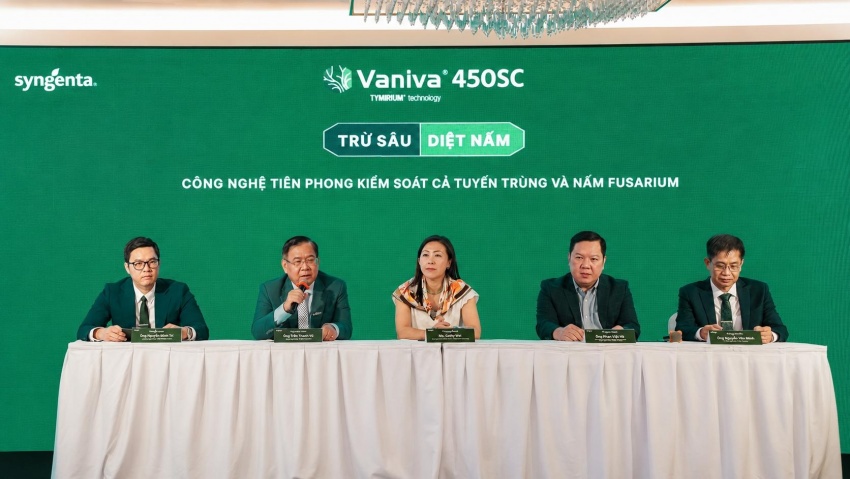
Representatives of Syngenta Vietnam and WASI at the Vaniva® 450SC press conference. Photo: Syngenta Vietnam

Breakthrough solution from Syngenta

Powered by TYMIRIUM technology and featuring the active ingredient cyclobutrifluram, Vaniva 450SC provides effective control of plant-parasitic nematodes and key soil-borne diseases, particularly Fusarium spp., helping protect root systems and establish a strong foundation for healthy crop growth from the earliest stages.

Developed through more than 15 years of Syngenta research and innovation, TYMIRIUM technology is designed to address some of the most challenging below-ground pests and diseases while protecting soil and root health.

Vaniva is a new-generation solution and is currently the only product in Vietnam classified in the dual mode-of-action group, registered for the control of both nematodes and Fusarium.

By safeguarding root systems early in the crop cycle, Vaniva 450SC helps improve water and nutrient uptake, supports vigorous crop establishment, and enhances plant resilience under challenging growing conditions. Beyond delivering effective crop protection, TYMIRIUM technology reflects Syngenta’s commitment to advancing sustainable and regenerative agriculture by developing innovative solutions that help farmers increase productivity while reducing environmental impact.

According to Syngenta, solutions powered by TYMIRIUM technology are being introduced across more than 100 crops in over 60 countries, demonstrating the company’s continued commitment to innovation that enables farmers to produce more while caring for the health of their soils and the future of agriculture.

Syngenta Vietnam strengthens crop root disease protection with Vaniva 450SC
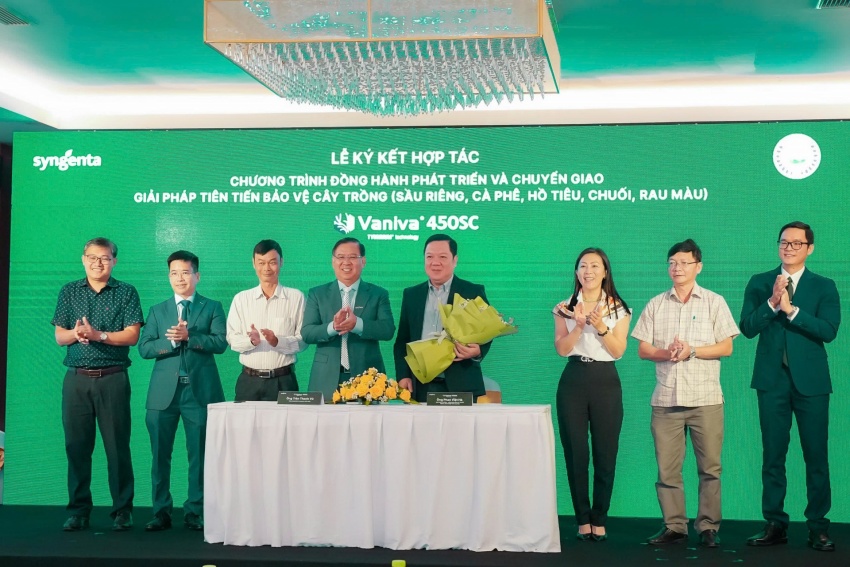
Syngenta Vietnam and WASI sign a cooperation agreement for a joint programme to develop and transfer crop protection solutions. Photo: Syngenta Vietnam

Safe for people and crops

Vaniva 450SC delivers superior efficacy at low active-ingredient rates – only 1/2 to 1/10 of some other solutions – meaning significantly less active ingredient enters the environment, reducing environmental impact and better protecting beneficial organisms. In the soil, the product does not affect earthworms or the beneficial microorganisms essential to soil fertility.

By conserving soil biodiversity and increasing root biomass, it supports soil health and a sustainable agricultural ecosystem – reflecting Syngenta’s direction of developing solutions that protect soil health, support regenerative agriculture and reduce environmental impact.

The launch of Vaniva 450SC reflects Syngenta’s long-term commitment, guided by its purpose of “Breakthroughs for farmers, in every field.”

What sets Syngenta apart is not only its innovative products, but also its integrated approach – combining world-leading research and innovation with close partnerships with farmers through technical knowledge transfer, safe crop protection stewardship training, field days, and on-farm demonstration trials conducted directly in farming communities.

Tran Thanh Vu, managing director of Syngenta Vietnam, said, “With Vaniva 450SC we complete a comprehensive root-protection solution for farmers – from nematodes to fungal disease, including Fusarium, for which no truly effective solution previously existed. This is the result of many years of research, and it reflects Syngenta’s commitment: bringing the most advanced technologies, safer for people and the environment, to Vietnam’s fields.”

ASEAN steps up digital push for agriculture MSMEs to boost competitiveness ASEAN steps up digital push for agriculture MSMEs to boost competitiveness

USDA opens applications for agribusiness trade mission to Vietnam USDA opens applications for agribusiness trade mission to Vietnam
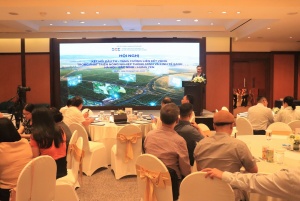
Hanoi, Bac Ninh and Hung Yen seek closer regional integration to attract investment in smart agriculture Hanoi, Bac Ninh and Hung Yen seek closer regional integration to attract investment in smart agriculture

Rize raises $31 million to accelerate sustainable rice farming in Vietnam and Southeast Asia Rize raises $31 million to accelerate sustainable rice farming in Vietnam and Southeast Asia

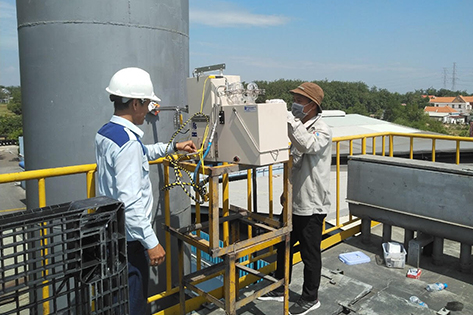
Second-quarter 2026 financial results released by several cement manufacturers point to solid business performance both during the quarter and in the first half of the year.

Accordingly, Vicem Ha Tien Cement JSC has reported second-quarter (Q2) 2026 net revenue of approximately $90.4 million, up 17 per cent on-year. Its pre-tax profit reached $6.73 million, an increase of 31.7 per cent on-year.

The result marked the company’s highest quarterly profit in the past five years, enabling Vicem Ha Tien to complete more than half of its annual profit target after the first half of the year.

Cement producers sustain growth as construction demand holds firm
Total cement and clinker consumption approximated 61 million tonnes in the first half of 2026, up nearly 16 per cent on-year

According to the company, the strong performance was driven by a 6.4 per cent increase in cement sales volume compared with the same period of 2025.

The company also recognised revenue from cost-recovery fees related to the construction of a road stretch connecting Nguyen Duy Trinh road to Phu Huu Industrial Park in Ho Chi Minh City.

For the first six months of 2026, Vicem Ha Tien posted net revenue of nearly $164.8 million and pre-tax profit of more than $10.8 million, representing on-year growth of 17.15 per cent and 109.5 per cent, respectively.

La Hien VVMI Cement JSC also reported improved results, saying cement sales volume rose about 12.4 per cent in Q2 as local property market showed signs of recovery.

In addition to higher average selling prices, which boosted revenue compared with the same period last year, the company’s financial income increased by nearly 63.6 per cent. Measures to improve productivity and reduce production costs also contributed to stronger profit growth.

The company’s net revenue reached $7.9 million, up 5 per cent on-year, while Q2 pre-tax profit rose 47 per cent to $1 million. In the first half of 2026, the company’s pre-tax profit totalled $1.12 million, an increase of 40.7 per cent from a year earlier.

Vicem But Son, which posted a pre-tax loss of $644,000 in the first half of 2025, returned to profitability with first-half 2026 pre-tax earnings of $564,000, including $440,000 in the second quarter alone.

Vicem Hoang Mai also reported positive results, recording first-half pre-tax profit of $320,000, up 1.5 per cent on-year.

According to data from the Vietnam Building Materials Information and Data Centre (BIDC), total cement production reached 58.14 million tonnes in the first half, an increase of around 9 per cent compared with the same period last year.

Total cement and clinker consumption reached 60.98 million tonnes, up nearly 16 per cent. Although June saw signs of slower market growth, cumulative first-half results continued to reflect solid underlying demand.

Domestic consumption totalled 41.58 million tonnes, up 16 per cent on-year, while total exports reached 19.4 million tonnes, an increase of 15 per cent. Export value was approximately $720.5 million, up 14 per cent from the same period last year.

BIDC also noted that market activities slowed in June, with production, domestic consumption and exports all declining slightly from the previous month, although remaining above levels recorded in June 2025.

The trend suggests that market demand has not weakened remarkably, but future growth is becoming increasingly dependent on public investment and exports.

During the remainder of the year, the cement industry’s outlook will hinge on the pace of infrastructure investment disbursement, the recovery of the property market and developments in international freight costs.

Businesses face challenges in greenhouse gas inventories Businesses face challenges in greenhouse gas inventories

Enterprises, particularly in the thermal power, cement, and iron and steel sectors, face major challenges in compiling greenhouse gas inventories due to fragmented data systems, inconsistent activity data, and a lack of dedicated personnel.

Thailand cuts 3.8 million tonnes of CO2 via low-carbon cement Thailand cuts 3.8 million tonnes of CO2 via low-carbon cement

Thailand reduced more than 3.8 million tonnes of CO2 through low-carbon cement adoption, exceeding its nationally determined contribution targets and advancing a collaborative public-private Net Zero model.

Cement firms maintain pessimistic outlook Cement firms maintain pessimistic outlook

Cement firms across the country continue to face tough times with dwindling consumption amidst the stagnant real estate market, reduced residential project deployment, and shrinking exports.

Cement firms aspire for better performance following policy move Cement firms aspire for better performance following policy move

A new policy aimed at addressing the challenges facing the production and consumption of construction materials, particularly cement, is expected to help the sector boost consumption and improve revenue over the rest of this year.

Vietnam’s reforms earn international recognition as government reviews July performance
Minister of Finance Ngo Van Tuan. Photo: VGP/ Nhat Bac

International organisations raise Vietnam’s growth outlook

According to the Ministry of Finance (MoF), the global environment remains volatile, with slowing growth in major economies, renewed tensions in the Middle East pushing up oil prices, and the United States imposing additional tariffs of 10-12.5 per cent on imports from 60 economies.

Domestically, following the third plenum of the Party Central Committee, the government has accelerated new policies. International organisations have continued to commend Vietnam’s reform efforts and have revised their forecasts for the country’s GDP growth upwards.

Macroeconomic conditions remain broadly stable, with inflation under control. The consumer price index fell 0.1 per cent in July from the previous month, while average inflation for the first seven months was estimated at 4.39 per cent on-year, remaining within the government’s annual target.

Supplies of electricity and petroleum products were secured, while domestic fuel prices remained relatively low compared with regional markets thanks to tax and fee measures.

Monetary policy, exchange rates, and interest rates continued to be managed proactively amid external pressures, helping improve short-term banking system liquidity. Capital market development also continued, with registered capital mobilisation reaching an estimated $16 billion, up 25.9 per cent on-year.

State budget revenue in the first seven months was estimated at $71 billion, equivalent to 72.5 per cent of the annual target and up 16 per cent from a year earlier. The government also completed the allocation of more than $103 billion in medium-term public investment capital.

Public investment disbursement reached $16 billion during January-July, equivalent to 41.9 per cent of the annual plan, up $3 billion from the same period last year.

Registered foreign direct investment totalled $38.06 billion in the first seven months, up 50.9 per cent on-year, while realised FDI reached $15.2 billion, an increase of 11.8 per cent. Total import-export turnover was estimated at $659.6 billion, up 28.1 per cent.

Agriculture maintained stable production, while the industrial production index rose 11.4 per cent in the first seven months, the highest growth since 2019. Retail sales and consumer service revenue increased 13.1 per cent during the period, in line with the government’s annual target, while international arrivals reached a record 13.92 million, up 13.7 per cent.

187,200 enterprises entered the market during the first seven months, up 7.5 per cent, exceeding the 155,300 businesses that exited the market.

Government steps up reforms

Minister Tuan said the government had continued rolling out Conclusion No.18-KL/TW, focusing on improving institutions, enhancing the investment climate, upgrading infrastructure, and attracting investment from all economic sectors.

During the first seven months, the government and the prime minister issued 387 legal documents, including 47 in July alone, while accelerating draft legislation and resolving long-delayed projects.

The government also launched a 100-day action plan to remove bottlenecks in digital transformation and completed a review resulting in a catalogue of more than 3,000 standards supporting strategic technology development.

Despite the positive results, the MoF said industrial production growth remained around 0.6 percentage points below the level required to achieve the annual target of 12-14 per cent.

Private consumption improved in July but remained relatively weak. Excluding price effects, consumption increased 7.5 per cent, only slightly above the 7.4 per cent recorded in the same period last year.

Projects continued to face localised labour shortages, rising labour and material costs, and weather-related disruptions to public investment disbursement. Five ministries and localities recorded disbursement rates below 10 per cent or had yet to disburse public investment funds.

Inflation management remains challenging as price pressures typically increase towards the end of the year and global oil prices remain volatile. Lending interest rates have continued to rise, while the banking sector faces ongoing liquidity pressure. Delays in issuing implementing regulations also persist.

Key priorities for rest of year

The MoF proposed eight priorities to support growth during the rest of the year. On fiscal policy, the government will continue tax and fee support measures for businesses and households, adjust fuel taxes where necessary, accelerate public investment disbursement, and tighten recurrent spending.

The State Bank of Vietnam will maintain stability in the monetary and foreign exchange markets, manage credit growth flexibly, stabilise lending rates, improve access to finance, accelerate bad debt resolution, and strengthen banking supervision.

The Ministry of Industry and Trade will continue managing domestic fuel prices, ensure energy security, assess trade imbalances, and maximise the benefits of Vietnam’s free trade agreements while working with relevant agencies to address issues arising during trade negotiations with the United States.

Local authorities will also continue reducing administrative procedures, logistics costs, and compliance burdens for businesses, while accelerating key transport infrastructure projects, including Long Thanh International Airport, boosting private investment, improving the business environment, advancing institutional reform, and implementing the government’s 100-day digital transformation programme.

Vietnam urged to upgrade FDI quality as global production chains restructure Vietnam urged to upgrade FDI quality as global production chains restructure

Global production networks are undergoing profound restructuring under the combined impact of tariff policies, AI, and growing concerns over supply chain security. As competition among major economies shifts from low-cost manufacturing to technological capability, Vietnam needs to improve the quality of foreign direct investment, strengthen its industrial ecosystem, and develop domestic enterprises to move up global value chains.

Economy needs 11.9 per cent growth in H2 to achieve 10 per cent GDP target for 2026 Economy needs 11.9 per cent growth in H2 to achieve 10 per cent GDP target for 2026

Vietnam’s economy will need to grow by around 11.9 per cent in the second half of 2026 to achieve the government’s 10 per cent GDP growth target for the full year. However, this is not simply a matter of accelerating growth. It also requires keeping inflation under control, maintaining macroeconomic stability, and improving the quality of growth.

The Next Wave of Startups (NWoS) Incubation Program 2026 was announced at the Founders’ Meetup #1 policy seminar in Ho Chi Minh City on July 31.

The event provided a comprehensive overview of Vietnam’s policies supporting startups and innovation, while offering practical guidance on how startups can effectively access resources across the innovation ecosystem.

According to Dinh Xuan Tu, acting director of the Technology Incubation Centre under the Department of Startups and Technology Enterprises at the Ministry of Science and Technology (MoST), developing a vibrant startup and innovation ecosystem, particularly technology spin-off enterprises, is increasingly important as science and technology, innovation, and digital transformation become key drivers of economic growth and national competitiveness.

“Under new resolutions and relevant directives, the Department of Startups and Technology Enterprises has led the formulation of key policies to foster innovation and technology enterprise development,” Tu said.

According to the MoST, Vietnam’s innovation startup ecosystem has made significant progress, with around 4,000 innovative startups, nearly 210 venture capital funds, close to 200 incubators, and approximately 1,000 enterprises certified as sci-tech businesses. In addition, more than 40 technology spin-offs have been established from research institutes, universities, and corporations.

However, from a public administration perspective, Tu noted that the number of technology spin-offs in Vietnam remains well below the country’s research and innovation potential.

“The commercialisation of research outcomes continues to face significant challenges. Limited access to capital, expert support, markets, and government support policies remains a major obstacle for many startups and technology spin-offs. These are also the issues that policymakers are working to address by refining mechanisms to create a more enabling environment for innovation and enterprise development in the years ahead,” he said.

Nguyen Dac Binh Minh, deputy director general of the National Academy for Advanced Techonogy and Innovation under the MoST, said Vietnam needs to foster a new entrepreneurial mindset, encouraging young people to seek employment after graduation and become founders and leaders of future technology enterprises and corporations.

According to Minh, the government is shifting from a regulatory mindset to a development-oriented, enabling approach that recognises businesses and innovation as key drivers of economic growth.

“Alongside the new legal framework, the government is introducing a range of policies to strengthen the innovation ecosystem. These include regulations on the National Venture Capital Fund, financial mechanisms for science, technology and innovation, public-private partnerships in sci-tech, technology market development, as well as policies to support startups and innovation networks,” Minh said.

Following its inaugural edition in 2025, the Next Wave of Startups initiative, launched by WorkFlow, the Open Innovation & Technopreneur Institute, and partners to support Vietnam’s and the region’s startup ecosystem, has entered a new phase with the launch of the NWoS Incubation Program 2026.

While the 2025 edition focused on identifying and selecting promising startups through a competition format, the 2026 programme marks a shift towards a comprehensive incubation model. The initiative is designed to support startups in refining their business models, expanding into new markets, and strengthening their long-term growth potential.

The 2025 NWoS offering attracted nearly 200 applications, bringing together almost 40 local and international experts and mentors, as well as more than 1,000 participants, including representatives from organisations, businesses, and international partners. These outcomes reflected the strong interest of the startup community while providing organisers with valuable insights into the evolving needs of Vietnamese startups as they move into their next stage of development.

As Vietnam’s innovation ecosystem continues to mature, an increasing number of startups have progressed beyond the ideation stage, with early products already in the market. They are now facing more complex challenges, including validating business models, acquiring enterprise customers, expanding into new markets, and preparing for fundraising rounds. In response, the programme has evolved into an incubation model focused on providing long-term, hands-on support, rather than limiting its role to identifying and selecting promising startups.

New programme addresses changing startup landscape
Private capital market shifts from growth-at-all-costs to patient capital Private capital market shifts from growth-at-all-costs to patient capital

As Vietnam’s private capital market matures, investors are shifting their focus from aggressive expansion to long-term, sustainable growth. At the VIPC Summit on May 28, Nguyen Thanh Thao, CEO of Thien Viet Securities (TVS) explained why ‘patient capital’ – capital focused on governance, operational resilience, and sustainable value – is becoming the new benchmark.

Capital concentrated in later-stage startups, leaving funding gaps for early ventures Capital concentrated in later-stage startups, leaving funding gaps for early ventures

Capital remains available for Vietnam’s innovation economy, but it is becoming increasingly concentrated in later-stage companies, exposing critical funding and exit gaps that could constrain the next generation of startups.

Photo: Vincom Retail

On July 29, Vincom Retail released its consolidated financial statements for the second quarter, reporting net revenue of approximately $91 million, up 11 per cent on-year.

Revenue from shopping mall leasing and related services reached around $87.2 million, an increase of 10 per cent on-year. The growth was driven by an improvement in the occupancy rate, which rose 2.3 percentage points to 88.6 per cent at the end of the second quarter, a slight increase in average rental rates across the portfolio, and contributions from shopping centres opened in the second half of 2025.

Excluding the performance of Vincom Center Nguyen Chi Thanh, leasing and related service revenue increased 11.5 per cent on-year during the quarter.

In addition to its core business, financial income remained a key earnings driver. Financial revenue rose 25 per cent on-year to approximately $32.5 million in the second quarter, bringing the total for the first six months of 2026 to around $65 million.

The largest contributor to financial income was interest earned from deposits, loans, and deposits paid, totalling approximately $32.7 million during the quarter. Meanwhile, financial expenses declined 18 per cent to around $8.5 million, including interest expenses of approximately $7.7 million.

After accounting for expenses and taxes, Vincom Retail posted net profit of approximately $61.9 million in the second quarter, up 30 per cent compared to a year earlier.

The company said its adjusted consolidated net revenue, calculated by adding pro forma revenue from the transfer of investment property recorded in the first quarter to reported net revenue, and first-half after-tax profit had respectively fulfilled 49 per cent and 58 per cent of its full-year 2026 targets.

Part of the Vingroup ecosystem, Vincom Retail operates the country’s largest shopping mall network, comprising 90 shopping centres across 31 provinces and cities with a total gross floor area of nearly 1.91 million square metres.

For 2026, the company targets revenue of approximately $390 million and after-tax profit of around $207 million.

According to the company, Vincom shopping centres welcomed 112 million visitors in the first half of the year, while its commercial streets attracted 4.2 million visitors, representing on-year increases of 11.6 per cent and 16.3 per cent, respectively.

In the third quarter, Vincom Retail plans to continue expanding its network with the opening of Vincom Plaza Dan Phuong, which is scheduled to commence operations in August.

Vingroup divests from Vincom Retail Vingroup divests from Vincom Retail
Vincom Retail retains brand name following Vingroup divestment Vincom Retail retains brand name following Vingroup divestment

Vincom Retail poised for growth Vincom Retail poised for growth

Vincom Retail named among Forbes Vietnam's top 25 leading brands Vincom Retail named among Forbes Vietnam’s top 25 leading brands

Vincom Mega Mall Ocean City – a “rookie” magnet for international brands Vincom Mega Mall Ocean City – a “rookie” magnet for international brands

Vincom Mega Mall Ocean City unveils lineup of unprecedented experiences Vincom Mega Mall Ocean City unveils lineup of unprecedented experiences
Vincom Retail transfers ownership of Vincom Centre Nguyen Chi Thanh Vincom Retail transfers ownership of Vincom Centre Nguyen Chi Thanh

Vincom Retail Debuts Multi-Experience Commercial Concept Vincom Retail Debuts Multi-Experience Commercial Concept

The Ministry of Finance (MoF) has rolled out a series of tax, fee, and charge measures in 2026 to support businesses and individuals while promoting economic growth. Among the most significant measures is the extension of the 2 percentage-point reduction in VAT through the end of 2026.

In response to volatility in global energy markets, the MoF has also advised the government and the National Assembly to adopt a series of tax relief measures on petroleum products during 2026.

Tax incentives drive small business investment and expansion

These included reductions in preferential import tariffs, environmental protection tax, VAT and special consumption tax (SCT) on petrol and oil products during appropriate periods, helping stabilise fuel supplies and curb rising energy prices.

Alongside these short-term measures, the MoF proposed amendments to several tax laws, which were adopted by the National Assembly on April 24 as Law No.09/2026/QH16.

The legislation raises the revenue threshold below which individual business operators are exempt from personal income tax, increases the VAT exemption threshold for household businesses and individual entrepreneurs, and extends the preferential SCT treatment for battery-powered vehicles carrying fewer than 24 passengers through the end of 2030.

The government has also issued regulations extending payment deadlines for VAT, corporate income tax, personal income tax and land rental fees in 2026, easing cash-flow pressures for businesses and household enterprises.

The coordinated implementation of tax and fee measures has received broad support from both the business community and the public, helping lower input costs, support production and business activities, create jobs, contain inflation and maintain macroeconomic stability.

According to data from the Tax Department under the Ministry of Finance, total tax reductions reached approximately $2.21 billion in the first six months of 2026.

Specifically, reducing the VAT rate from 10 per cent to 8 per cent allowed businesses to retain approximately $875.6 million. More importantly, operating cost pressures were substantially eased after the environmental protection tax on petrol and oil was reduced to zero per litre, providing support equivalent to approximately $1.07 billion.

In addition, the application of a zero per cent SCT on petrol reduced costs by a further $148 million, while the abolition of the business licence fee from the beginning of 2026 enabled small businesses and household enterprises to save approximately $116 million.

These figures underscore the effectiveness of the government’s policy approach, which contributed to GDP growth of 8.18 per cent in the first half of 2026.

They also reflect the government’s strategy of accepting lower short-term budget revenues to foster stronger long-term revenue generation.

Mac Quoc Anh, vice chairman and secretary general of the Hanoi Small and Medium-sized Enterprises (SMEs) Association, said Vietnam has introduced a series of tax measures in recent years to support SMEs, a key segment of the private sector that makes a significant contribution to economic growth and employment.

“Revised tax laws provide preferential tax rates for SMEs, particularly micro-enterprises and household businesses,” said Quoc Anh, “Tax exemptions, reductions, and payment deferrals have helped businesses maintain liquidity, secure cash flow for wages and raw materials, and support a return to growth.”

“They also encourage companies to invest in machinery, improve production processes, and move towards meeting environmental, social, and governance standards and advancing the green transition,” he added. “These are essential conditions for SMEs to scale up rapidly, develop sustainably, and integrate into global value chains.”

Bui Manh Toan, chairman and CEO of Vietnox JSC, said tax incentives are among the most important tools for helping SMEs accelerate growth while pursuing long-term sustainability.

“When tax burdens are reduced, businesses have greater resources to invest in production, technological innovation, product quality improvements, and market expansion,” he said. “However, tax and fee incentives should be complemented by broader support measures, including improved access to finance and stronger corporate governance capabilities. Such a comprehensive policy framework will help SMEs achieve stable and sustainable long-term growth.”

Tax incentives set to accelerate EV adoption and curb pollution Tax incentives set to accelerate EV adoption and curb pollution

Vietnam is moving to extend tax breaks for electric vehicles, aiming to accelerate adoption, cut emissions and support industry growth as the country pushes forward with its green transition agenda.

VCCI agrees with proposal to extend tax incentives for EVs VCCI agrees with proposal to extend tax incentives for EVs

The Vietnam Chamber of Commerce and Industry agrees with the Ministry of Finance’s proposal to extend the special consumption tax on motor vehicles under 24 seats powered by batteries.

Vietnam grants tax incentives for long-term fund investors Vietnam grants tax incentives for long-term fund investors

Investors holding open-ended fund certificates for more than two years have become eligible for capital gains tax exemptions from July 1, while the tax on investment income from funds has been halved under Vietnam’s revised Personal Income Tax Law.

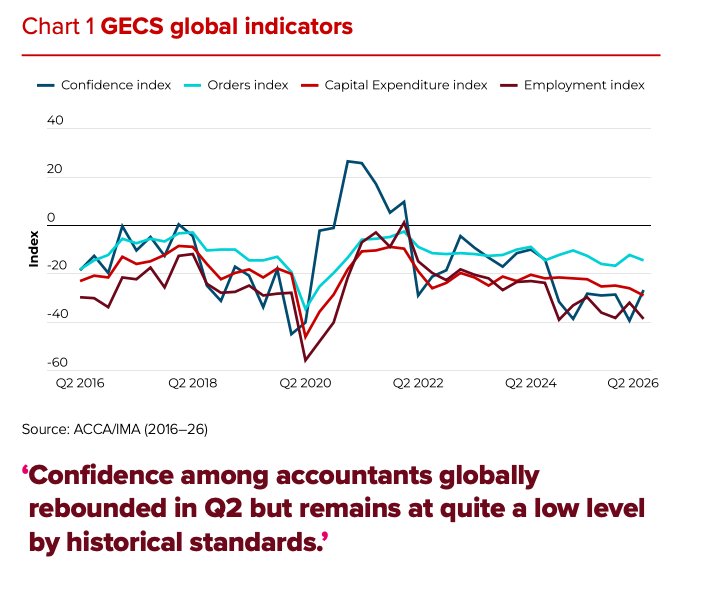
The findings of the Global Economic Conditions Survey, conducted by the Association of Chartered Certified Accountants (ACCA) and the Institute of Management Accountants (IMA) and released on July 21, highlighted the continued impact of the conflict in the Middle East on global business sentiment. The survey was conducted between 3-17 June, before the renewed fighting and resumption of the US naval blockade.

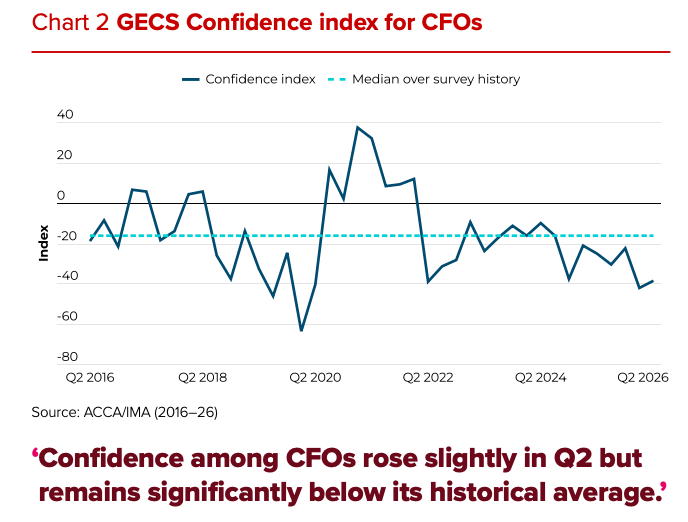
Over three-quarters of accountants globally reported increased operating costs in the second quarter (Q2), above the previous record set in the aftermath of Russia’s invasion of Ukraine, amid soaring commodity prices and supply chain disruptions resulting from the conflict. Strikingly, 83 per cent of CFOs experienced increased costs, following a record-breaking rise of over 20 percentage points from Q1. This is close to series peaks recorded in 2022 and 2023.

Despite soaring costs, there was some recovery in confidence among accountants globally in Q2, from what was close to a record low in Q1. While they remain quite downbeat by historical standards, the improvement likely reflects the relative resilience of the global economy and signs at the time of the survey of movement towards a potential resolution of the conflict, which may have reduced fears of worst-case scenarios.

Accountants and CFOs see sharp Q2 cost increases

That said, declines in the Global New Orders, Capital Expenditure and Employment indices point to some slowing in global growth, likely reflecting headwinds from increased private sector caution, rising inflation, and tighter-than-expected monetary policy, although they do not appear to be signalling a major economic slowdown.

Confidence among accountants remains weak by historical standards in North America and Western Europe, but after a sharp recovery in Q2 is now meaningfully above average in Asia-Pacific. While the region is very exposed to developments in the Middle East, hopes of a potential resolution of the conflict and the relative resilience of the global economy have likely been factors boosting sentiment, as well as the global AI boom, of which the region’s exporters are major beneficiaries.

Economic pressures returned as accountants’ top risk priority in Q2 2026, at 22 per cent, ahead of geopolitical instability at 20per cent and cybersecurity at 14 per cent. Respondents described how understanding today’s risk landscape extends beyond traditional economic cycle management, pointing to the converging effects of prolonged wars, rising cybercrime and policy uncertainty. AI featured prominently, with comments focusing on sustainable value, cyber resilience and accountability.

Accountants and CFOs see sharp Q2 cost increases

“The AI boom is providing major support to the global economy and financial markets, but developments in the Middle East over coming months will be crucial. If progress can be made in resolving the conflict, that would clearly be supportive for global growth as we progress through the second half of 2026. But downside risks would quickly build if there were a return to major hostilities and surge in energy prices,” said Alain Mulder, senior director, Europe Operations and Global Special Projects at IMA.

Jonathan Ashworth, chief economist at ACCA, noted that sharply rising costs were a major issue for firms in the second quarter.

“If they increasingly try to pass these on to consumers, this would significantly raise the risk of policy tightening by the world’s major central banks,” Ashworth said. “That said, policymakers will be hoping for favourable developments on the diplomatic front and a return of oil prices to around pre-crisis levels, potentially allowing them to sit on their hands for the rest of 2026.”

“Despite some improvement in confidence, accountants globally remain very cautious, likely reflecting the uncertain operating environment which has become the ‘new normal’ in recent years,” he added.

ACCA and VACPA deepen partnership to support Vietnam's green finance transition ACCA and VACPA deepen partnership to support Vietnam’s green finance transition

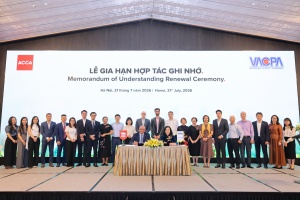
The renewal of the MoU between ACCA Vietnam and the VACPA marks not only a new chapter in their long-standing partnership, but also a shared commitment to build a transparent, sustainable financial ecosystem and address the growing risk of greenwashing.

Career guidance aligned with global norms gain traction Career guidance aligned with global norms gain traction

Moves to reinforce career guidance in general education are advancing, supported by initiatives that incorporate international professional standards into pathways for secondary school students.

Small business ESG strategies unlocked Small business ESG strategies unlocked

A true sustainability ecosystem requires global endorsement, genuine green financing, and technology solutions to lower the cost of implementation for businesses.