AI tools of tomorrow being written today
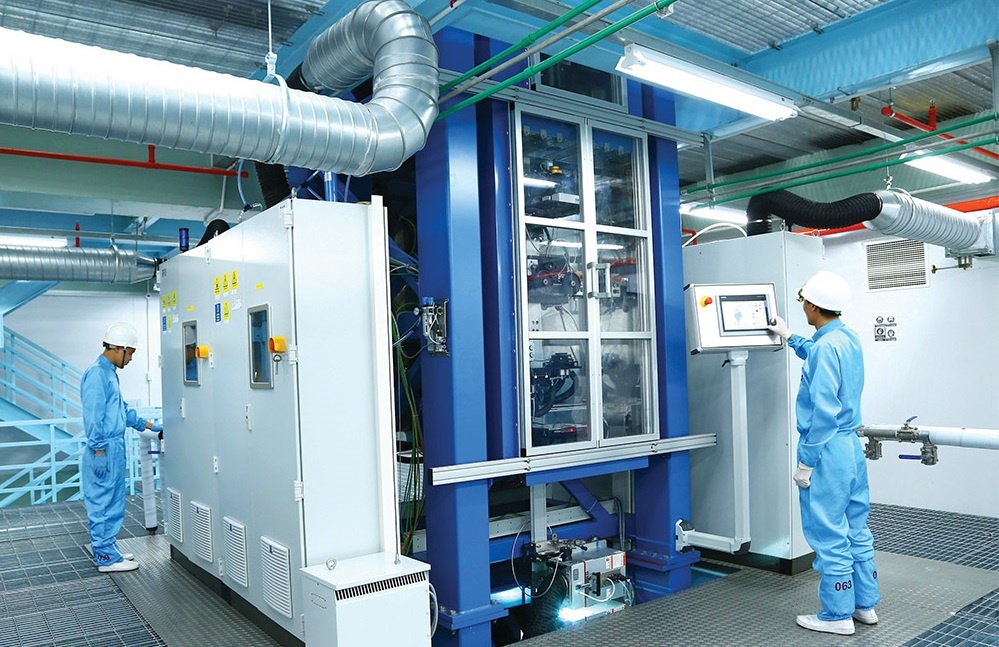
AI-powered tools can enhance outcomes and improve accuracy in manufacturing, healthcare, and more, photo Le Toan

Sharing about how AI adoption has brought significant changes to business operations, Pham Van Viet, CEO of Viet Thang Jeans, told media that the company has been applying AI for more than two years.

The company uses AI in clothing design, production, product introduction, e-commerce sales, customer interaction, planning, reporting, and consumer trend forecasting. Since then, thanks to AI applications, performance has improved markedly, cutting down 90 per cent of the time and cost from production to sales, planning, and reporting.

“Adopting AI is not too expensive to use small-scale AI applications for specific functions. The key is maximising their capacity,” Viet said.

Initially, the company invested in three AI tools for some functions at $50 per tool per year. Later, an additional 13 AI tools have been installed to cover most processes, reducing the cost to only $17 per tool per year.

“The performance of AI application is superb. Previously, without AI, production cost 10 units and took 10 days, but now it costs only 1 unit, a 90 per cent reduction,” Viet added. “In the past, the company had to hold many meetings to make decisions, but now AI quickly aggregates and provides information. AI works like an assistant, taking over 70-80 per cent of the tasks we used to do.”

At a workshop on AI transformation in Southeast Asian businesses in Ho Chi Minh City on August 27, Fabian Singer, general manager of Siemens Healthineers Vietnam, reflected on the healthcare sector’s growing use of AI-powered tools to enhance patient outcomes, improve diagnostic accuracy, and create personalised treatment plans.

He highlighted how AI can substantially enhance doctors productivity and decision-making capabilities. “Though AI can never replace the doctor, it can assist them with a second pair of eyes, reduce the burden of growing workload, and improve their ability to see what might otherwise be missed,” he said.

Singer emphasised that successful AI transformation in healthcare depends on the broader ecosystem. “Medical professionals must be equipped with the skills and confidence to use AI tools effectively. Without targeted education and support, even using the most sophisticated systems cannot guarantee the most effective outcome,” Singer said.

Hoang Tri Mai, managing director of Airbus Vietnam, Laos and Cambodia, said that from predictive maintenance to satellite imagery analysis, AI is helping Airbus anticipate issues and optimise operations, as well as design smarter products and services to address climate change challenges.

Her key takeaway focused on what makes these applications possible: robust data infrastructure. “AI gives us the predictive power to foresee and mitigate issues before they arise, but that power is dependent on a foundation of reliable, integrated data,” Mai said.

She explained that without a strong data foundation, organisations struggle to scale solutions or generate meaningful insights. For Airbus, this means investing in sensor networks, real-time monitoring systems, open-data platforms, and collaborations with industry partners. Mai encouraged other businesses to prioritise data readiness early in their AI journey. “A robust data infrastructure gives AI the stability and scale it needs to deliver real business value,” she said.

Vo Trong Thu, head of AI Lab at GreenNode, said that AI can extract valuable insights, convert unstructured data (such as invoices and contracts) into structured data, enhance flexibility, and reduce risks. “In port management, AI can process container entries in just two seconds instead of 1-2 minutes manually, with nearly 100 per cent accuracy. An intelligent document processing system can save a large enterprise up to $600,000 per year by cutting two-thirds of paperwork handling time,” he said.

Warrick Cleine, chairman and CEO of KPMG in Vietnam and Cambodia, highlighted AI’s deep impact on its business model, from hourly rates to the rise of the digital headcount, where AI agents and software perform tasks traditionally handled by human employees. “The challenge isn’t just implementing new tools; it’s about redesigning the entire engine of our business, from how we price our value to how we develop our people,” Cleine said. “The digital headcount is real, and the career paths of tomorrow are being written today. The most important skill will be the ability to adapt.”


Vietjet soars in the first half of 2025

In its audited report released on August 30, the airline posted air transport revenue of VND35.6 trillion ($1.35 billion) and a pre-tax profit of nearly VND1.6 trillion ($60.7 million), up 37 per cent on-year. Consolidated revenue reached VND35.84 trillion ($1.36 billion) with pre-tax profit exceeding VND1.65 trillion ($62.6 million), a 65 per cent increase.

Vietjet operated 79,000 flights with 14.4 million passengers for the first six months of the year. It paid over VND4.53 trillion ($171.8 million) in taxes and fees. The company’s financial indicators remain strong, with excellent liquidity and consolidated assets exceeding VND112 trillion (approximately $4.25 billion).

Vietjet soars in the first half of 2025

For the same period, Vietjet placed an order for an additional 20 A330neo aircraft with Airbus, raising its total order to 40, making it the airline with the largest A330neo order in the world.

At the 2025 Paris Air Show, Vietjet secured a historic order for 100 A321neo aircraft, along with 50 purchase options – the largest deal in the industry – positioning Vietjet among the top 10 airlines globally in terms of aircraft orders.

Additionally, Vietjet and Rolls-Royce have signed an agreement for 40 Trent 7000 engines to power 20 wide-body Airbus A330neo aircraft, bringing the total number of Trent 7000 engines ordered by Vietjet to 80.

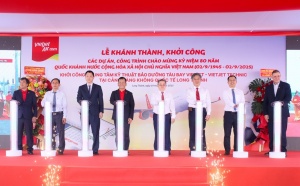
Vietjet also kicked off the construction of its Aircraft Maintenance Technical Centre in Long Thanh International Airport earlier this year, featuring hangars 3 and 4 which will be capable of servicing 10 aircraft simultaneously by international standards. This is a key component of the 80 initiatives celebrating Vietnam’s 80th National Day.

Furthermore, Vietjet has rolled out self-service ground operations at major airports to enhance service quality, optimise operations, and deliver an exceptional experience for passengers.

Vietjet soars in the first half of 2025

Vietjet has also been recognised by AirlineRatings as the ‘World’s Best Ultra Low-Cost Carrier’, while Forbes Vietnam has ranked Vietjet among the Top 5 revenue-generating enterprises for 2024 and in the Top 50 best-listed companies for 2025.

With a solid financial base, a focus on fleet modernisation, and key infrastructure projects underway, Vietjet is targeting sustainable growth and wider international expansion in the second half of 2025. These efforts are expected to attract investment and support Vietnam’s position as a regional aviation hub.

Vietjet announces new managing director Vietjet announces new managing director

Vietjet Aviation JSC has announced the appointment of Nguyen Thanh Son as the company’s managing director, succeeding Dinh Viet Phuong, leading the new age carrier in the next era of development.

Vietjet outperforms targets, wins Long Thanh project bid Vietjet outperforms targets, wins Long Thanh project bid

Vietjet’s Q2 business results have surpassed expectations while marking significant milestones with substantial aircraft orders, the expansion of ground self-service operations, and winning project bids at Long Thanh International Airport.

Vietjet starts work on aircraft maintenance facility in Long Thanh Vietjet starts work on aircraft maintenance facility in Long Thanh

Vietjet has started construction of an Aircraft Maintenance Technical Centre at Long Thanh International Airport in the southern province of Dong Nai.

Green-digital goals require balance
Photo: LeToan

In late August, Netherlands-headquartered IPTP Networks, a global telecommunications and infrastructure group, launched the AIDC DeCenter Data Centre in the central city of Danang. The facility will have capacity for 1,000 racks, a minimum power output of 10MW, and total capital of $200 million. Construction is expected to begin in March 2026.

Also last month, LG CNS signed an MoU with VNPT and Korea Investment Real Asset Management to jointly develop a hyperscale AI data centre in Vietnam.

According to technology experts, the rapid expansion of such data centres and digital infrastructure is creating a paradox: while digitalisation supports climate change adaptation and mitigation, it also consumes large amounts of energy and generates significant waste.

“Every three years, the world’s data doubles, and Vietnam is no exception as its data volume rises even faster. The core issue driving digital transformation is therefore digital infrastructure,” expert Tien Hoang said.

The European Chamber of Commerce (EuroCham) in Vietnam’s Digital Sector Committee stressed that balancing growth and sustainability requires looking at the entire digital ecosystem – from powering infrastructure with renewable energy to managing devices across their lifecycle and designing innovation with efficiency in mind.

“For example, powering data centres and telecom networks with renewable energy significantly reduces the footprint of the digital economy, while stronger e-waste management and circular economy practices can help conserve valuable resources,” said Bruno Sivanandan, co-chair of the committee. “At the same time, innovation in software and hardware design increasingly focuses on energy efficiency, from low-carbon cloud services to algorithms requiring less computing power.”

The Academy of Science and Technology Strategy noted that digital transformation is already challenging efforts to ensure environmental sustainability, with data centres among the biggest energy consumers.

Figures from the academy showed that in 2022, data centres consumed 240–340 billion kWh, about 1.3 per cent of global electricity. The IT industry as a whole uses 6–10 per cent of global electricity, emitting 3.7 per cent of total greenhouse gas emissions.

“Vietnam faces an urgent need to achieve economic development alongside environmental sustainability. This is challenging but also promising, and essential if the country is to fulfil its net-zero commitment by 2050 and enhance overall competitiveness,” Vu Van Tich, deputy director of the academy, told VIR. “Without clean energy solutions, the digitalisation process will put additional pressure on the national grid and drive up emissions, making it harder to meet sustainable development targets.”

Vietnam is seeing growing interest from domestic and international businesses developing data centres to meet soaring demand, particularly as AI drives rapid increases in data processing.

According to Cushman & Wakefield, by 2024 Vietnam had 51MW of operational data centre capacity, 11MW under construction, and a further 28MW planned. Ho Chi Minh City accounts for half of the country’s operational capacity.

Vietnam’s data centre market is projected to reach $1.75 trillion by 2030, growing at a compound annual rate of almost 18 per cent, according to Research and Markets.

Local technology firms such as VNPT, Viettel, CMC, FPT, and VNG are actively expanding their data centre networks. CMC plans to invest up to $500 million in facilities in Vietnam, Japan, and several other countries by 2028.

In April, Viettel began building its high-tech data centre and research and development complex in Ho Chi Minh City. Once completed, it will be among the 10 largest in Southeast Asia. Viettel is also planning 11 large-scale data centres with combined capacity exceeding 350MW, representing about 40 per cent of the country’s total.

“Leading digital companies sit at the heart of this challenge,” said Sivanandan of EuroCham. “On one hand, their data centres, telecom networks, and device supply chains contribute significantly to emissions. On the other, these companies provide the technologies that help other industries cut carbon and adapt to climate risks. Their responsibility is twofold: to decarbonise themselves and to enable broader climate action.”

To support sustainable growth, the Ministry of Science and Technology is rolling out solutions focused on greener digital infrastructure.

According to national planning in ICT towards 2030, approved in 2024, all new data centres must meet global green standards. Investors are required to ensure that the Power Usage Effectiveness index of newly built facilities does not exceed 1.4, below the global average. The ministry is also working with agencies to raise awareness, improve digital skills, and promote green practices.

Exchanges – core of building trust and transparency in Vietnams digital asset market
Danang Finance and Tech Week took place from August 28-30

The event, on August 29, took place as Vietnam finalises its legal framework for digital assets under the newly passed Law on Digital Technology Industry, marking a new chapter for the market with greater transparency and oversight. It also supported the development of an international financial centre in Vietnam, with Danang as a key location.

Nguyen Thanh Nghi, Head of the Central Committee for Policy and Strategy, emphasised, “The integration of finance, technology, and semiconductors at this event shows Danang’s thorough preparation and reflects a long-term strategy to turn the city into a new financial and technological hub for Vietnam and the region.”

Among these areas, blockchain and semiconductors are two of the 11 strategic national technology sectors prioritised for research, development, and mastery. For blockchain, key product groups will focus on digital assets, cryptocurrencies, digital identity and data encryption, cybersecurity, and traceability. Meanwhile, the semiconductor industry will research, and pilot the production and commercialisation of specialised chips, AI, the Internet of Things (IoT), and photonic chips.

Deputy Minister of Finance Nguyen Thi Bich Ngoc noted that Danang’s strategic location on the East-West economic corridor, combined with a deep-water seaport and modern international airport, provides substantial potential to become a financial centre supporting logistics, risk insurance, and cross-border trade. This is not just a geographic advantage, but also a major benefit for the ecosystem of finance, logistics, insurance, and risk management.

Exchanges – core of building trust and transparency in Vietnams digital asset market
The Vietnam Finance Forum took place on August 28

Nguyen Van Quang, Secretary of Danang Party Committee, said the event was symbolic, underscoring the city’s pioneering role in digital economic development and modern finance.

For Vietnam, particularly Danang, seizing opportunities in these sectors is especially important. As major global financial centres are redefining development models based on innovation and technology, Danang holds advantages in location, infrastructure, human resources, and policy direction to become a new growth pole.

“Fintech, blockchain, semiconductors, and green finance are no longer unfamiliar concepts. They are becoming crucial pillars shaping the future global economy. With its current potential, Danang is ready to welcome cooperation, investment, and major policy initiatives aligned with the goal of forming Vietnam’s international financial centre in the city,” Quang said.

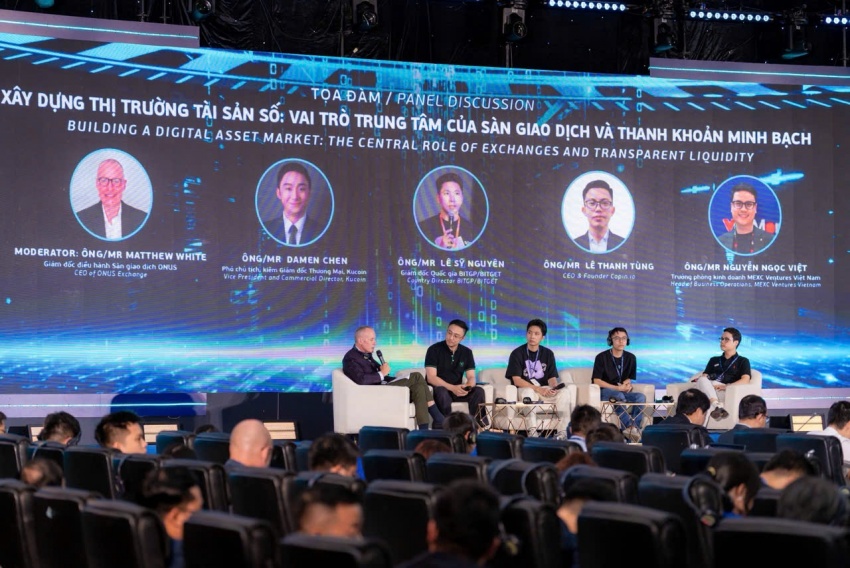
During the panel discussion, delegates agreed that digital asset exchanges play a central role in ensuring transparency, liquidity, and investor confidence, both for individuals and institutions. Representatives from both domestic and international platforms emphasised the need to prioritise tools for open data, such as proof of reserve, open APIs for third-party auditing, and strict risk control processes to prevent market manipulation.

Le Sy Nguyen, CEO of the Web3 exchange BITGP, said, “A transparent exchange is not just a place to trade, but a platform that sets standards for the market. Requirements like KYC, AML, liquidity disclosures, and user asset protection should be seen as fundamental, not burdensome.”

Experts also discussed the exchanges’ role in connecting innovative projects (builders) with the community and investors. They emphasised the need to establish fair and clear listing mechanisms for Vietnamese projects, helping domestic Web3 products reach users. Models like innovation zone, launchpad, or sandbox-based trial listings were considered suitable directions.

Exchanges – core of building trust and transparency in Vietnams digital asset market
A panel discussion on building a digital asset market

As an exchange built on the technology and liquidity of Bitget, a platform that has implemented builder support models in many countries- BITGP announced it is currently localising listing standards and community support, while also being ready to share international experiences in areas such as risk management, digital asset classification, and hybrid CeFi-DeFi trading.

Delegates also pointed out challenges stemming from inconsistent regulations, especially as Vietnam is in the process of preparing a sandbox mechanism. Ensuring fair competition among exchanges while maintaining compliance with international standards is considered a prerequisite for a sustainable environment.

“We hope to see clear criteria for the sandbox, allowing the trial of models such as real-world asset tokenisation, non-custodial wallets, and automated liquidity services, all within a supervised framework. Thereby, both investors and businesses can feel more secure,” Nguyen added.

In the long term, exchanges are also expected to contribute to policy consultations, market data sharing, and co-designing experimental frameworks with regulatory agencies, following an open but controlled approach. This is considered a key foundation for moving Vietnam’s digital assets out of the grey zone and into a legal, recognised part of the national digital economy.

Digital assets set for expansion in Vietnam amid new legal foundation Digital assets set for expansion in Vietnam amid new legal foundation

Vietnam’s growing interest in digital assets is creating significant opportunities, supported by a young workforce and rapid adaptability.

Hanoi forum to focus on future of sci-tech, innovation, and digital transformation Hanoi forum to focus on future of sci-tech, innovation, and digital transformation

The Ministry of Science and Technology (MoST) will host a forum about the future of sci-tech, innovation, and digital transformation in Hanoi on August 29, expecting to attract policymakers, domestic and international businesses, embassies, leading experts, and international organisations.

Vietnam announces five major sci-tech initiatives Vietnam announces five major sci-tech initiatives

The Ministry of Science and Technology (MoST) hosted a forum on the future of science, technology, innovation, and national digital transformation at the Vietnam National Exhibition Centre in Hanoi on August 29.

AgriS teams up with ITOCHU to advance alternative sweeteners
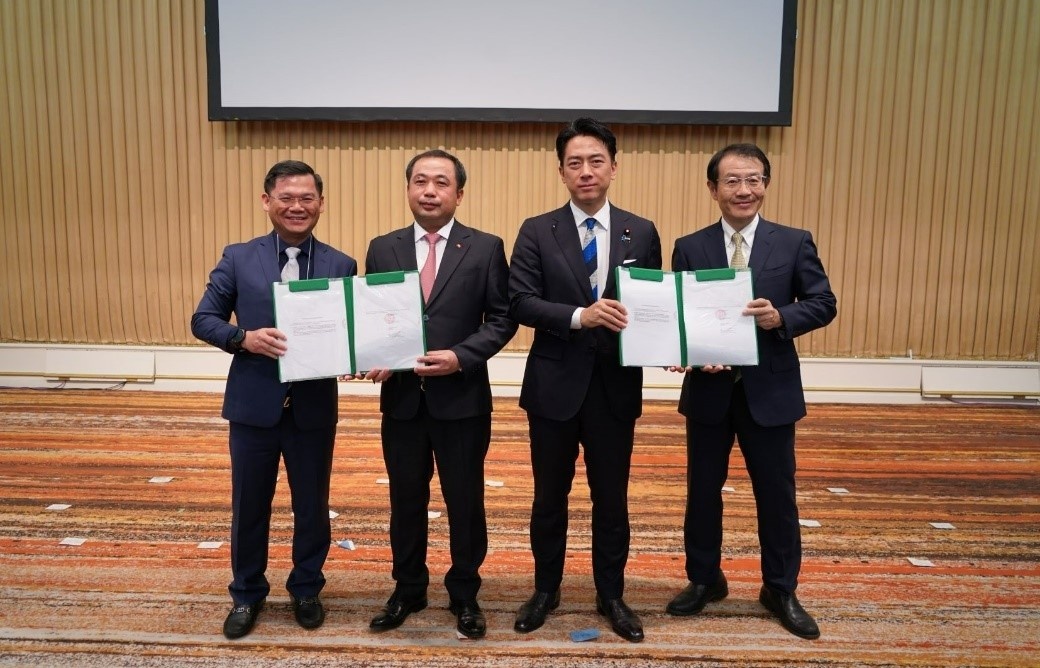
Tran Duc Thang, Acting Minister of Agriculture and Environment (second to the left), and Koizumi Shinjiro, Japanese Minister of Agriculture, Forestry, and Fisheries (third to the left), testified the MoU signing between AgriS and ITOCHU

The signing took place at the 6th Japan–Vietnam Public–Private Forum on September 4.

The agreement aims to enhance the supply of sustainable raw sugar while jointly developing and commercializing alternative sweeteners and functional ingredients, contributing to improved health for Vietnamese consumers.

Under the agreement, ITOCHU will strengthen its supply of raw sugar to AgriS and collaborate in researching and expanding the alternative sweetener market. By combining ITOCHU’s global sourcing network and expertise in alternative products with AgriS’ strong understanding of local consumers, the partnership will create new value that meets the growing demand for healthier nutritional choices in Vietnam.

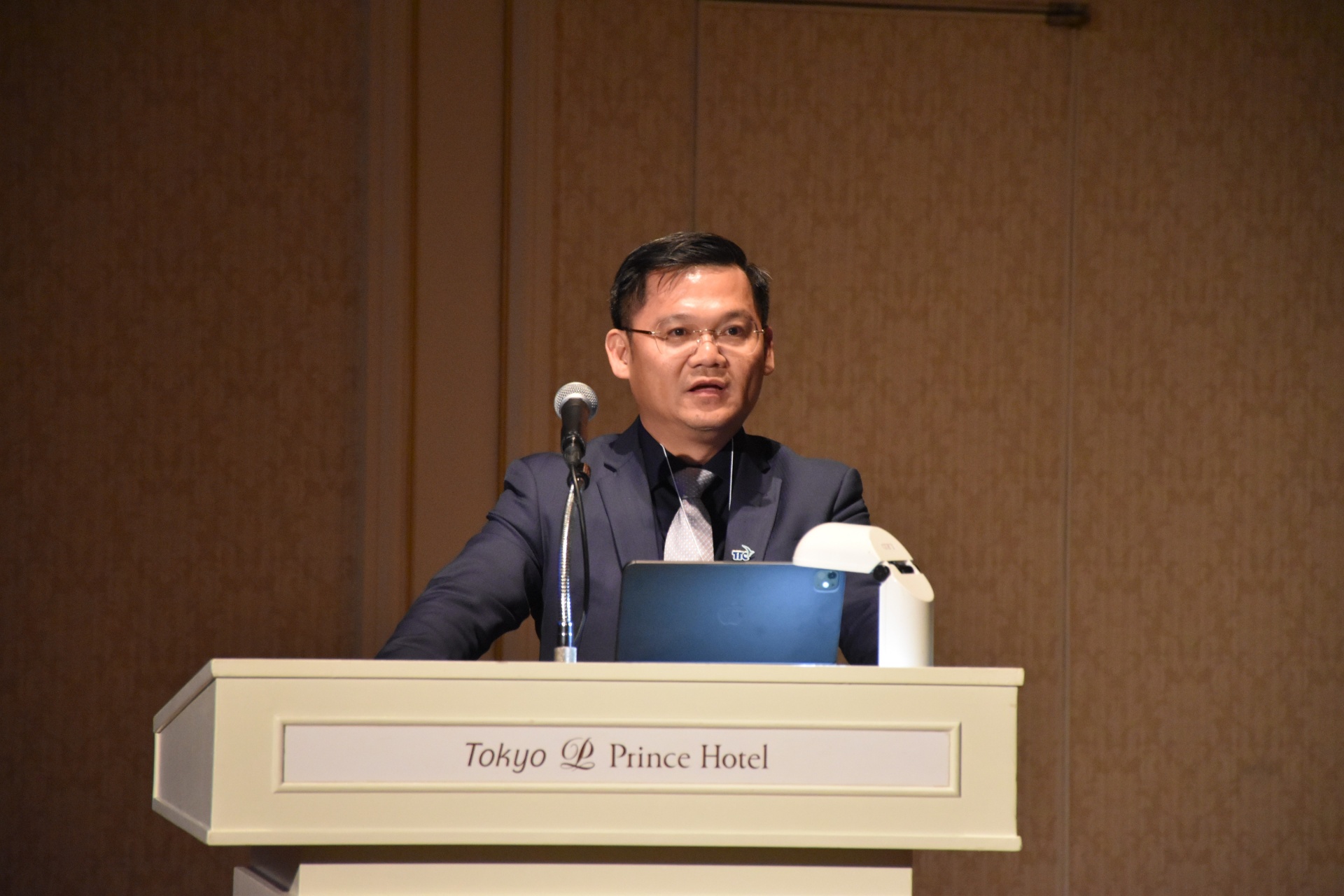
Speaking at the event, Thai Van Chuyen, CEO of AgriS, emphasized, “AgriS highly values ​​the Vietnam–Japan Agricultural Cooperation Vision 2025-2030, which focuses on high technology, food security, and new-generation official development assistance. This aligns with AgriS’ commitment to building a green, clean, and smart agriculture sector. Through this collaboration with ITOCHU, we expect to further expand partnerships with Japanese counterparts in cross-border agricultural logistics projects, promote two-way agricultural trade, and deliver high-quality, health-beneficial products to global consumers.”

AgriS teams up with ITOCHU to advance alternative sweeteners
Thai Van Chuyen, CEO of AgriS

Headquartered in Tokyo, Japan, ITOCHU is one of the world’s oldest general trading companies with over 160 years of history and a presence in 61 countries. The group operates across multiple sectors, from trade and import-export to domestic and international investments, and is pursuing the strategy “The Brand-new Deal – Value Lies Downstream” to expand businesses that directly engage with consumers.

AgriS is Vietnam’s leading high-tech agricultural group, steadily transforming into a comprehensive agriculture solutions provider by integrating three technology pillars: agricultural technology, food technology, and fintech, all operated under internationally recognised environmental, social, and governance standards. In the context of rising consumer interest in health and the growing trend towards alternative sweeteners, this partnership underscores AgriS’ commitment to working with reputable global partners to deliver optimal nutritional solutions to the community.

AgriS builds leadership team for next strategic phase AgriS builds leadership team for next strategic phase

AgriS is strengthening its executive leadership as it enters a pivotal new phase in its drive to lead Vietnam’s high-tech agricultural transformation.

AgriS promotes high-tech agriculture cooperation between Vietnam and Australia AgriS promotes high-tech agriculture cooperation between Vietnam and Australia

TTC AgriSand its subsidiary Global Mind Australia (GMA), in collaboration with Tay Ninh People’s Committee, held a high-tech agricultural conference in Queensland, Australia on August 12.

AgriS aims to accelerate digitalization and datafication of agriculture sector AgriS aims to accelerate digitalization and datafication of agriculture sector

AgriS presented its solutions for agricultural modernization and digitalization to Prime Minister Pham Minh Chinh at the inauguration of the National Data Center on August 18.

CIT eligibility may help pull in investment
New tax frameworks are expected to help enterprises get more funding and expand domestic production, photo Le Toan

According to the draft decree on guiding the implementation of the Law on Corporate Income Tax (CIT), which has been submitted for approval, the Ministry of Finance proposes expanding incentives, extending periods of tax exemption and reduction, and applying lower tax rates for prioritised projects.

These aim to support businesses and promote investment in key sectors and priority areas.

Under the draft, enterprises with income eligible for incentives under this law will be exempt from CIT for four years and benefit from a 50 per cent tax reduction for the following nine years.

This exemption and reduction policy also applies to income generated from enterprises operating in vocational education and high-level skills training, provided they are located in incentivised areas.

If such enterprises operate outside these incentivised areas, the four-year tax exemption still applies, but the 50 per cent tax reduction is limited to a maximum of five subsequent years.

For certain other categories, the tax incentives are defined as a two-year exemption and a 50 per cent decrease for the following four years. In the case of new ventures in especially encouraged sectors, the government is authorised to extend the exemption and reduction period up to 1.5 times the standard duration mentioned above, provided that the total incentive period does not surpass the lifespan of the project.

The draft specifies that the tax exemption and reduction period is calculated from the first year the enterprise generates taxable income from the undertaking. If the enterprise does not have taxable income within the first three years of generating revenue, the exemption and reduction period will start from the fourth year.

The draft also includes detailed provisions regarding tax incentives for business expansion. If an enterprise expands its operations, whether by increasing scale, enhancing capacity, upgrading technology, reducing pollution, or improving the environment, any additional income generated from the expansion will receive the same tax incentives as the existing scheme for the remainder of the applicable period.

The draft decree also proposes a preferential tax rate of 10 per cent for 15 years for income from certain new projects in incentivised sectors or in areas with difficult or extremely difficult socioeconomic conditions. Eligible areas include high-tech zones, high-tech agricultural zones, dedicated digital technology parks, and economic zones subject to tax incentives.

Additionally, a 10 per cent tax rate without a time limit will apply to specific cases, such as enterprises operating in incentivised sectors within incentivised locations; publishers, cooperatives, and cooperative unions operating under current regulations; and media agencies carrying out activities aligned with priority sectors.

A tax rate of 15 per cent is proposed for income generated from specific business activities not located in incentivised areas.

For new initiatives in certain priority sectors, implemented in economic zones or areas with difficult socioeconomic conditions (but not in areas qualifying for special incentives), a preferential tax rate of 17 per cent will be applied for a period of 10 years. For certain specific activities, the 17 per cent tax rate may be applied indefinitely.

These consist of new investments with capital of $240,000 or more, those producing globally competitive products, achieving annual revenue of $800 million within five years of revenue generation, consistently employing 6,000 workers or more, or investing in essential economic and technical infrastructure.

The draft decree, once enacted, is expected to create momentum for the country to pull in more funding and expand domestic production.

Figures from the National Statistics Office showed that in the first seven months of 2025, the number of businesses registering to halt performance hit 88,600, up 13.6 per cent on-year.

Moreover, 41,500 enterprises halted operations to await dissolution procedures, up 16.7 per cent on-year; and 14,300 businesses completed such procedures, up 20.5 per cent on-year. On average each month, 20,600 enterprises left the market.

CIT law amendments boast exceptional sci-tech incentives CIT law amendments boast exceptional sci-tech incentives

Vietnam is drafting major changes to its corporate income tax legislation, offering unprecedented incentives in sci-tech and digital transformation.

Smaller businesses the focal point of CIT law amendments Smaller businesses the focal point of CIT law amendments

Hundreds of thousands of smaller enterprises in Vietnam are set to benefit from a reduction in corporate income tax from next year, meaning more opportunities to improve their competitiveness.

CIT specifics address smaller firms CIT specifics address smaller firms

Hundreds of thousands of micro- and small-sized enterprises in Vietnam will be entitled to a decrease in corporate income tax from this October, meaning more opportunities to ameliorate their competitiveness.

THACO unveils latest innovations at national showcase

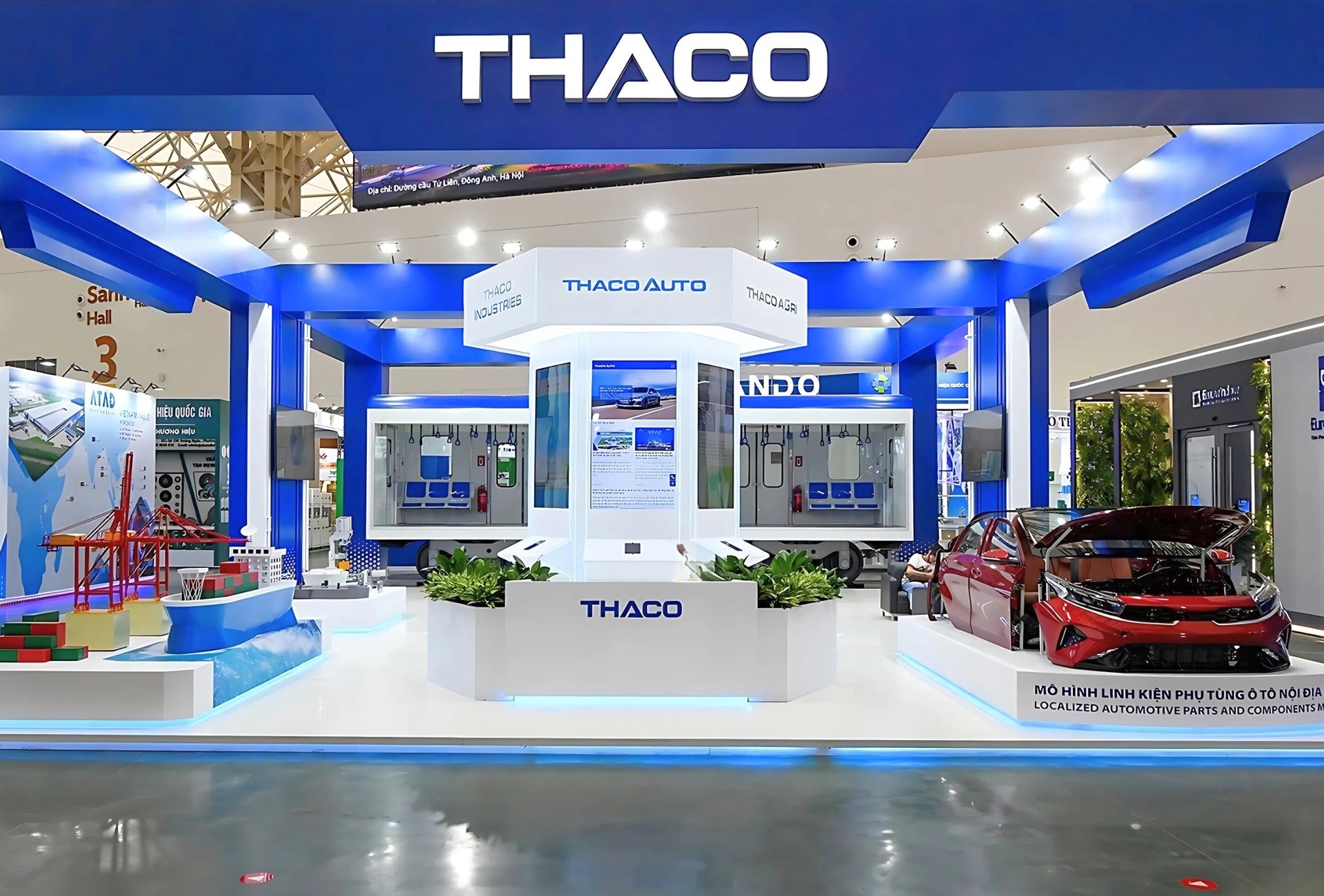
Running from August 28 to September 5, the exhibition highlights Vietnam’s achievements across multiple sectors. At its 200-square-metre booth, THACO is presenting products ranging from autonomous robots and ship-to-shore cranes to auto parts and components for export. The company has also unveiled an urban train carriage model, manufactured at the THACO Chu Lai Industrial Park, for the first time.

The carriage measures 10 metres in length, 2.95 metres in width, and 3.9 metres in height, with a weight of 10 tonnes excluding bogies. Designed with 26 seats and 124 standing places, it can carry up to 150 passengers.

The train body frame is made from high-strength steel and aluminium alloy. It is manufactured on a modern production line under a closed-loop process that covers fabrication, welding, surface treatment, and finishing paint, meeting international standards EN 12663-1, EN 14067-1, and EN 14067-4 for durability, safety, and aesthetics. This strategic step paves the way for THACO to enter the railway sector, the country’s spearhead infrastructure sector.

THACO also introduced the AI navigation assistant robot TIAR-01 at the event, featuring a modern design, omnidirectional movement, and an automatic SLAM navigation system. TIAR-01 boasts smart features, such as guiding and supporting visitors, looking up information, updating news quickly, interacting for entertainment, and monitoring environmental conditions.

THACO unveils latest innovations at national showcase

In parallel to this, the autonomous mobile robot AMR for transporting luggage is also equipped with SLAM navigation technology. It features flexible movement, obstacle avoidance, and real-time route calculation. Powered by a lithium battery, it operates for 6–8 hours. The robot is equipped with a 2D LIDAR sensor, bumper, 3D camera, and an emergency stop button to ensure maximum safety.

In the field of heavy machinery, THACO displayed the ship-to-shore (STS) crane model – equipment for loading and unloading container ships at international seaports. The STS cranes are 900 tonnes in weight, with a lifting capacity of 50 tonnes, a 40-metre reach, a lifting speed of 50m/minute, a hoisting speed empty of 120m/minute, and trolley speed of 150m/minute, ensuring high loading and unloading productivity.

THACO unveils latest innovations at national showcase

THACO also introduced a model of the Chu Lai seaport, part of THILOGI’s integrated logistics hub combining road, seaport, and maritime transport. Positioned as a key gateway for the central region, the port facilitates trade flows linking southern Laos, northern Cambodia, and Vietnam’s Central Highlands with major markets including China, South Korea, Japan, and India.

Among the standout exhibits was a model of the KIA K3 passenger car, built with parts and components manufactured by THACO Industries, including the body frame, interior and exterior elements, power systems, electrical equipment, and refrigeration units. Mechanical components for export, produced on advanced lines imported from Germany, Japan, Switzerland, and South Korea, are already being supplied to markets such as the United States, Australia, Japan, and Finland – strengthening the reputation of Vietnamese engineering internationally.

The TACO booth has been regarded as one of the exhibition’s highlights, showcasing the company’s latest products while demonstrating its strategy of sustainable development, increased localisation, and investment in advanced technology.

The exhibition further offered a platform for THACO to present nearly 30 years of accumulated technical and technological achievements. The products on display are designed for practical use, reflecting the group’s commitment to real work and real value.

THACO lays out plans for $1 billion industrial park THACO lays out plans for $1 billion industrial park

Truong Hai Auto Corporation (THACO) is planning to begin the construction of a mechanical industrial park in the southern province of Binh Duong worth over $1 billion in September.

THACO Group to invest over $1 billion in Binh Duong industrial park THACO Group to invest over $1 billion in Binh Duong industrial park

THACO Group will build a 786-hectare industrial park in Binh Duong at a cost of over $1 billion, with construction scheduled to start in September.

Italy deepens Vietnam ties as SACE backs Gelex and THACO's growth plans Italy deepens Vietnam ties as SACE backs Gelex and THACO’s growth plans

SACE, the Italian insurance and finance group fully owned by the Italian Ministry of Economy and Finance, together with HSBC and LBBW, has finalised two medium-long term loans totalling $139 million, guaranteed by SACE, for Gelex Group and THACO AGRI, two of Vietnam’s leading industrial players.

Since early August, Vietnam’s monetary market has shown fresh signals regarding interest rate trends. According to the latest report from Bao Viet Securities, deposit rates have inched up at several key maturities after remaining relatively low in previous months.

Specifically, the average six-month deposit rate rose by 0.01 percentage points to 4.48 per cent, while the 12-month rate increased from 5.04 to 5.07 per cent.

This trend highlights a divergence in the banking sector. While state-owned commercial banks have largely maintained deposit rates at major maturities, many private banks have adjusted rates upward to attract deposits.

For instance, at its July 31 rate adjustment, Eximbank raised deposit rates by 0.1 percentage points for terms of 12 months and above, leaving shorter-term deposits largely unchanged. TPBank also increased rates by 0.1 percentage points across all tenors below 12 months, reflecting an effort to remain competitive in attracting deposits.

Market data as of August 8 show deposit rates for short-term tenors of one to three months ranging from 1.6 to 4.1 per cent per year, medium-term deposits of six to nine months at 2.9-5.25 per cent, and 12-month deposits at 3.7-5.6 per cent.

Saigonbank offered the highest 12-month savings rate at 5.6 per cent, followed closely by BVBank at 5.55 per cent, while NCB, Nam A Bank, BAC A BANK, and Vietbank each applied 5.5 per cent.

According to Bao Viet Securities, these adjustments came shortly after the State Bank of Vietnam (SBV) convened a meeting with commercial banks in early August, reaffirming its commitment to a flexible monetary policy and sustained liquidity support. The SBV urged banks to implement measures to reduce deposit rates to stabilise the money market and create space for lower lending rates.

“With inflation under control and exchange rate pressures moderate, the SBV is likely to maintain operating rates, deposit rates, and lending rates at relatively low levels. This is considered one of the key tools to stimulate credit demand and support economic growth,” the report noted.

MB Securities’ (MBS) latest report also echoed this view, highlighting that after a modest dip in June, deposit rates began edging up again in July. TPBank, VPBank, and Eximbank raised their deposit rates by 0.1-0.2 percentage points per year across maturities ranging from one to 36 months.

“The upward adjustment reflects an ongoing imbalance between credit growth and deposit mobilisation,” the report said. “By July 29, system-wide credit had expanded 9.8 per cent compared with the end of 2024 and 19.8 per cent on-year, according to the SBV.”

Therefore, MBS estimated that credit growth currently outpaces deposit growth by 1.3–1.5 times, creating pressure on private lenders to raise deposit rates to maintain funding stability.

MBS expects deposit rates to remain under pressure for the rest of 2025, particularly after the SBV granted banks additional credit room to meet the economy’s capital needs. At the same time, the central bank continues to urge institutions to implement synchronised measures aimed at lowering deposit rates, thereby creating scope for reduced lending rates.

Market analysts largely share this assessment. Dinh Duc Quang, managing director of the Currency Trading Division at UOB Vietnam, said that credit growth, which had already approached 10 per cent in the first half of the year, could expand by 18-20 per cent for the whole of 2025 under the current interest rate environment.

However, he noted that commercial banks’ capacity to further reduce VND deposit and lending rates in the remaining months is limited, as August deposit rates were only 0.2-0.4 percentage points lower than the same period in 2024, depending on tenor.

“These levels remain broadly in line with international USD rates and recent USD/VND exchange rate developments,” Quang told VIR. He added that external conditions, such as modest tariff impacts and successful stock market upgrades attracting foreign capital, could potentially push VND rates down by 0.5-0.75 percentage points.

Nguyen Hoang Linh, head of Research at Vietcombank Fund Management, said that the scope for further interest rate cuts is narrow. “Given the divergence between credit growth and money supply growth, the room for commercial banks to continue reducing rates is limited, and any further cuts will largely depend on external factors,” he said.

Linh underlined the pivotal role of the SBV in balancing monetary objectives, noting that interest rates remain one of the most important tools in the central bank’s multi-objective policy. He added that sustaining low rates and stability also requires coordinated government efforts, including accelerated public investment, improvements to the investment climate, boosting exports, and market diversification.

The event attracted the participation of ministries, central departments and agencies, and leaders of localities; embassies and international organisations in Vietnam, along with leading scientists and experts, and domestic and international tech corporations.

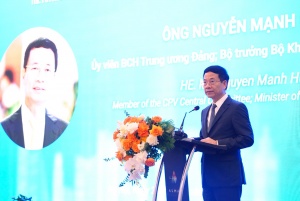
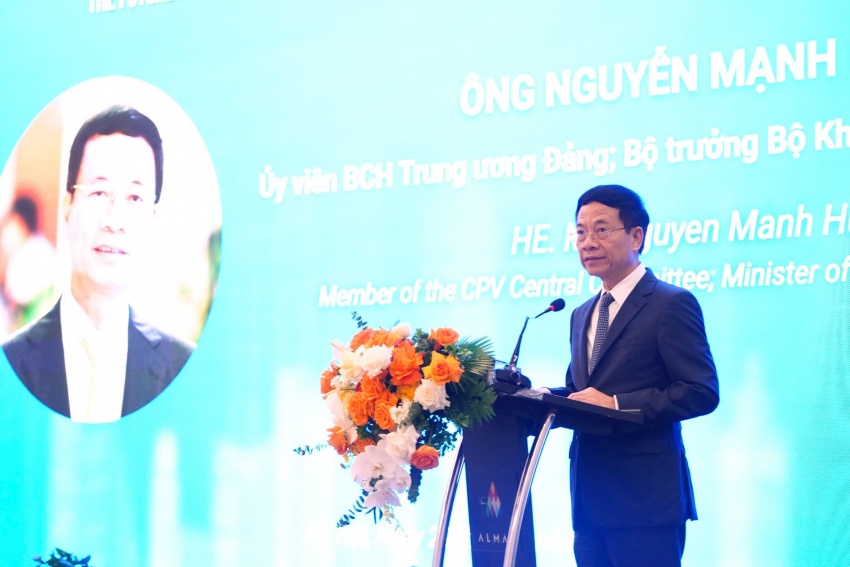
Making then opening speech, Minister of Science and Technology Nguyen Manh Hung said that over the past 80 years, science and technology have contributed to national development and integration. From achievements in agriculture, healthcare, and industry, to applications in daily life, science and technology have become a pillar closely associated with Vietnam’s development process.

Vietnam announces five major sci-tech initiatives
Minister of Science and Technology Nguyen Manh Hung. Photo: MoST

“Today, the new world context is posing great challenges and opportunities for Vietnam. We are entering the era of AI, big data, green energy, and a digital economy, an era in which knowledge, innovation, and technology become the most important production resources. In the previous century, natural resources and cheap labour were competitive, but now knowledge, technology, and innovation are the keys to determining the national position,” the minister said.

The event had four sessions. The first focused on discussing the future of sci-tech, with an emphasis on fundamental and strategic technologies.

The second delved into solutions to promote innovation and build a national innovative startup ecosystem.

Vietnam announces five major sci-tech initiatives
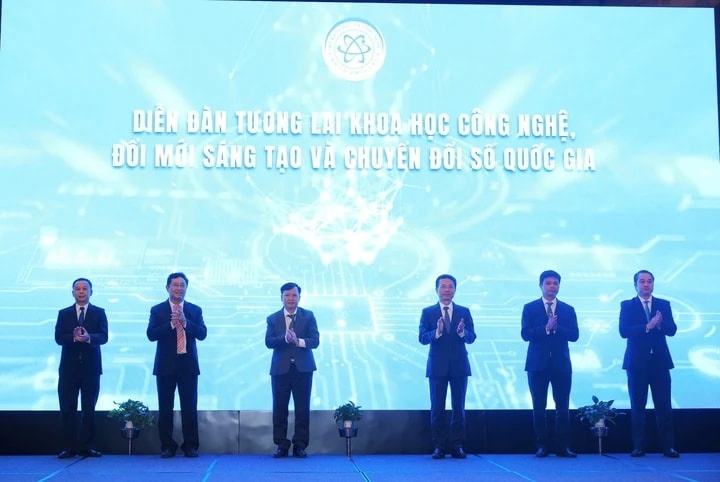
The launch of initiatives. Photo: MoST

The third discussed digital transformation, especially digital infrastructure and digital society, focusing on the future of national digital infrastructure, the application of digital transformation in state administration, healthcare, education, finance, and agriculture, and connecting digital transformation with innovation to drive double-digit GDP growth.

Session four focused on in-depth discussions about four topics: developing human resources for the future of sci-tech, innovation, and digital transformation; perfecting mechanisms, policies, and laws on sci-tech, innovation, and digital transformation; strengthening international cooperation; and promoting the leading role of technology enterprises.

At the forum, five major initiatives, creating a breakthrough foundation for the development of sci-tech in the digital age, were announced.

They included the science and technology exchange, the national initiative portal, a national strategic technology portfolio, Techfest 2025, and an annual report about the future of science, technology, innovation, and digital transformation to be released from 2026

Dialogue highlights role of innovation in advancing Vietnam's private economy Dialogue highlights role of innovation in advancing Vietnam’s private economy

Deputy Minister of Finance Nguyen Duc Tam has met with Boston Consulting Group (BCG) to deepen cooperation on policy development aimed at fostering Vietnam’s private sector.

Dassault Systèmes and Viettel ink MoU to boost Vietnam's high-tech sector Dassault Systèmes and Viettel ink MoU to boost Vietnam’s high-tech sector

Dassault Systèmes and Viettel signed an MoU to strengthen strategic cooperation in AI, machine learning (ML), digital design, and simulation on August 20.

Hanoi forum to focus on future of sci-tech, innovation, and digital transformation Hanoi forum to focus on future of sci-tech, innovation, and digital transformation

The Ministry of Science and Technology (MoST) will host a forum about the future of sci-tech, innovation, and digital transformation in Hanoi on August 29, expecting attract to attract, domestic and international businesses, embassies, leading experts, and international organizations.

Daiwa Securities to increase stake in SSI amid private placement

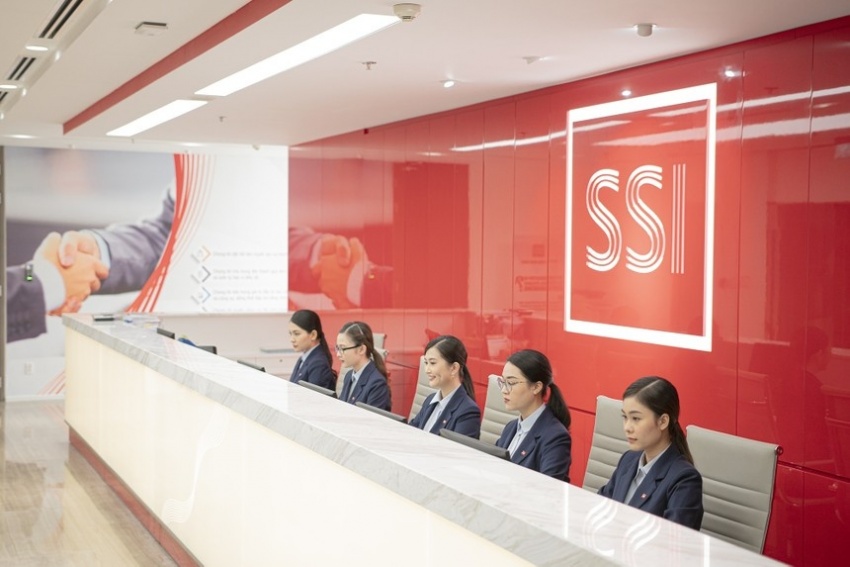
SSI, one of Vietnam’s leading securities firms, is conducting a private placement of 104 million shares to 18 professional investors, aiming to raise VND3.25 trillion ($130 million). Daiwa Securities has registered to buy nearly 16 million shares at VND31,300 ($1.25) each, a transaction worth over VND497 billion (around $19.9 million).

Daiwa Securities Group Inc. is already SSI’s largest shareholder, holding over 301 million shares, equivalent to over 15.25 per cent stake in the company. If the transaction is successful, Daiwa’s shareholding will increase to over 317 million shares. The transaction is scheduled to take place from August 29 to September 26.

Daiwa Securities Group is one of Japan’s ‘Big Four’ securities conglomerates, alongside Nomura, SMBC Nikko, and Mizuho. Established in 1902, the group operates in various sectors, including brokerage, investment, and asset management.

In 2011, Daiwa became a strategic shareholder of SSI by acquiring a 20 per cent stake. Last November, Daiwa exercised its right to purchase an additional 23.2 million SSI shares in a rights issue for existing shareholders.

SSI’s Board of Directors approved a plan on August 12 to offer more than 104 million shares in a private placement to 18 professional investors, including 14 institutions and four individuals.

At VND31,300 ($1.25) per share, the company aims to raise VND3.25 trillion ($130 million), with half allocated to investing in certificates of deposit and half for margin lending.

SSI recorded operating revenue of VND2.99 trillion ($119.6 million) in the second quarter of 2025, up nearly 30 per cent on-year. After-tax profit reached VND968 billion ($38.7 million), the highest in nearly four years.

For the first six months, SSI achieved revenue of VND5.15 trillion ($206 million) and profit of VND1.8 trillion ($72 million), up 20 per cent and 11 per cent respectively compared to the same period last year, surpassing 54 per cent of its annual target.

As of June 30, SSI’s total assets reached nearly VND92 trillion ($3.6 billion), an increase of VND19 trillion ($760 million) from the beginning of the year. Equity stood at approximately VND27.7 trillion ($1.17 billion), while margin lending hit a record of VND32.8 trillion ($1.3 billion), providing significant momentum for SSI to continue its strong performance in the upcoming quarters.

Sumitomo Corporation and SBI Holdings acquire stakes in FPT's AI Japan facility Sumitomo Corporation and SBI Holdings acquire stakes in FPT’s AI Japan facility

Sumitomo Corporation and SBI Holdings will each invest 20 per cent in FPT Smart Cloud Japan, a subsidiary of FPT Corporation.

SCGP acquires additional 30 per cent stake in Duy Tan Plastics SCGP acquires additional 30 per cent stake in Duy Tan Plastics

SCG Packaging Public Co., Ltd. (SCGP) announced on June 10 that it has strengthened its consumer packaging business through an investment in Duy Tan Plastics Manufacturing Corporation (Duy Tan JSC).

E-commerce credibility at stake as Vietnam moves to curb counterfeit goods E-commerce credibility at stake as Vietnam moves to curb counterfeit goods

Vietnam is set to tighten oversight of livestream sales and digital advertising amid rising concern over counterfeit goods on e-commerce platforms, in a bid to protect consumer trust and ensure fair competition.

Altri to acquire AeoniQ stake, scaling climate-positive textile yarn Altri to acquire AeoniQ stake, scaling climate-positive textile yarn

The deal accelerates global efforts to commercialise sustainable, carbon-negative fashion materials.